

Gem of the West Coast - La Rochelle
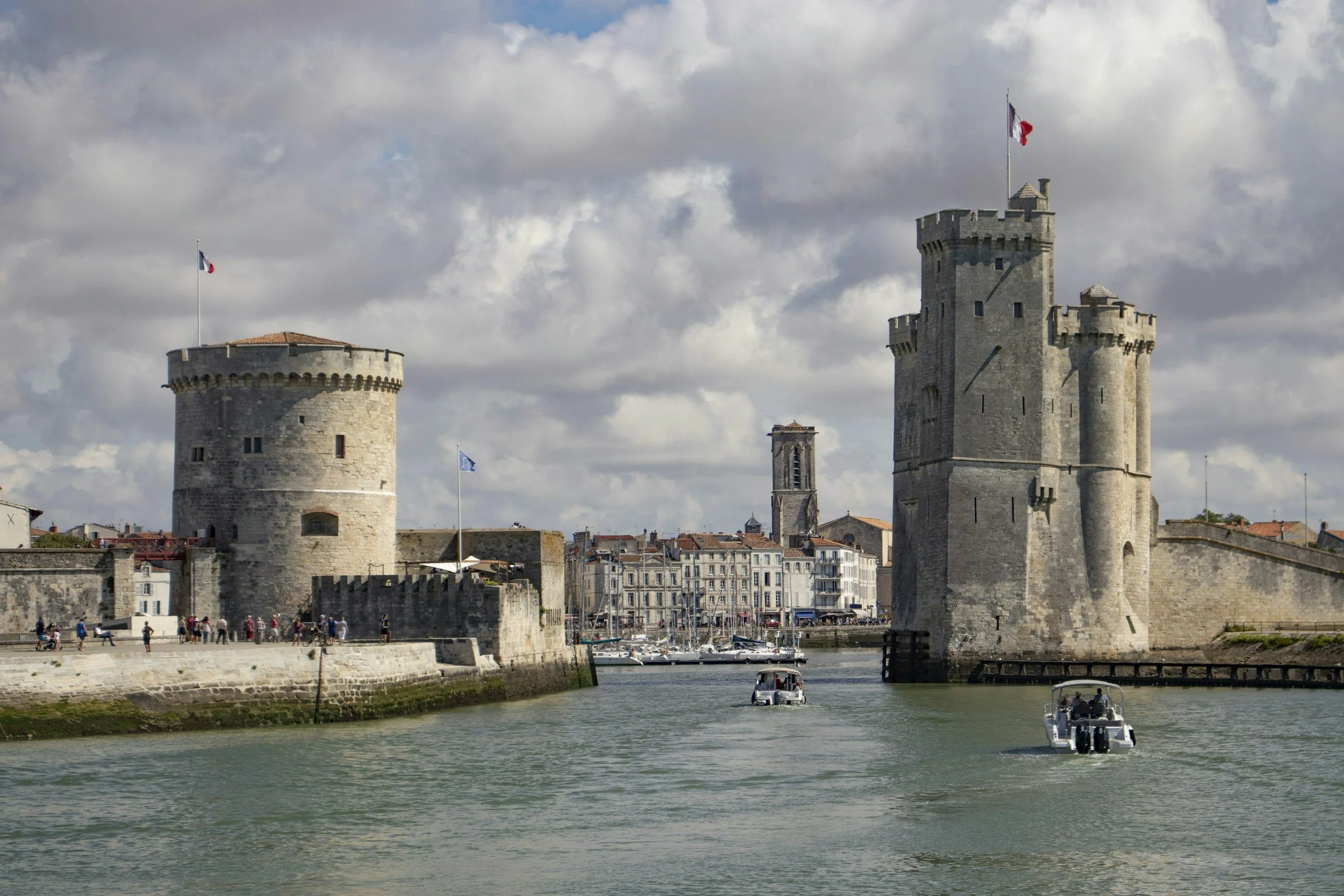
It had been a long time coming for me to finally visit La Rochelle. When you study French history, the city is a recurring one you hear. It was a fiercely independent port, a Protestant stronghold, and a city with a heavy role in the slave trade and French expansion to the Americas.
There is a lot to reconcile when you visit, and I think the city has done a fairly good job of offering something to a very wide range of visitors. The tourist office counts around 3 million visits a year across the destination, which surprised me because you would assume La Rochelle is more of a French secret.
But it isn’t; alongside French tourists, there was an array of British, Dutch, German, American, and Spanish tourists.
Photo by Guillaume QL on Unsplash
If you are French, of course you know La Rochelle because it is a gateway to tourist hotspot l’Île de Ré. But you may remember coming across La Rochelle in Les Trois Mousquetaires where Alexandre Dumas dramatized the siege engineered by Cardinal Richelieu (who shows up in my Marie de’ Medici article). As the chief minister to King Louis XIII in the 17th century, Richelieu was responsible for one of the deadliest sieges in French history. La Rochelle had been a Protestant stronghold for decades, protected by the Edict of Nantes, which Henri IV (raised as a Protestant and sheltered there as a boy) signed in 1598. His own son would be the one to try and undermine La Rochelle’s independence.
Already, some of my favorite characters have shaped this city: Richelieu, Henri IV; and during my stay I learned that one of its key figures of the 12th century is Eleanor of Aquitaine (Aliénor d’Aquitaine), my favorite queen. Let me share with you what I learned about the city’s history, which is fascinating, and about its role during the slave trade.
A fairy and the humble beginnings of the city
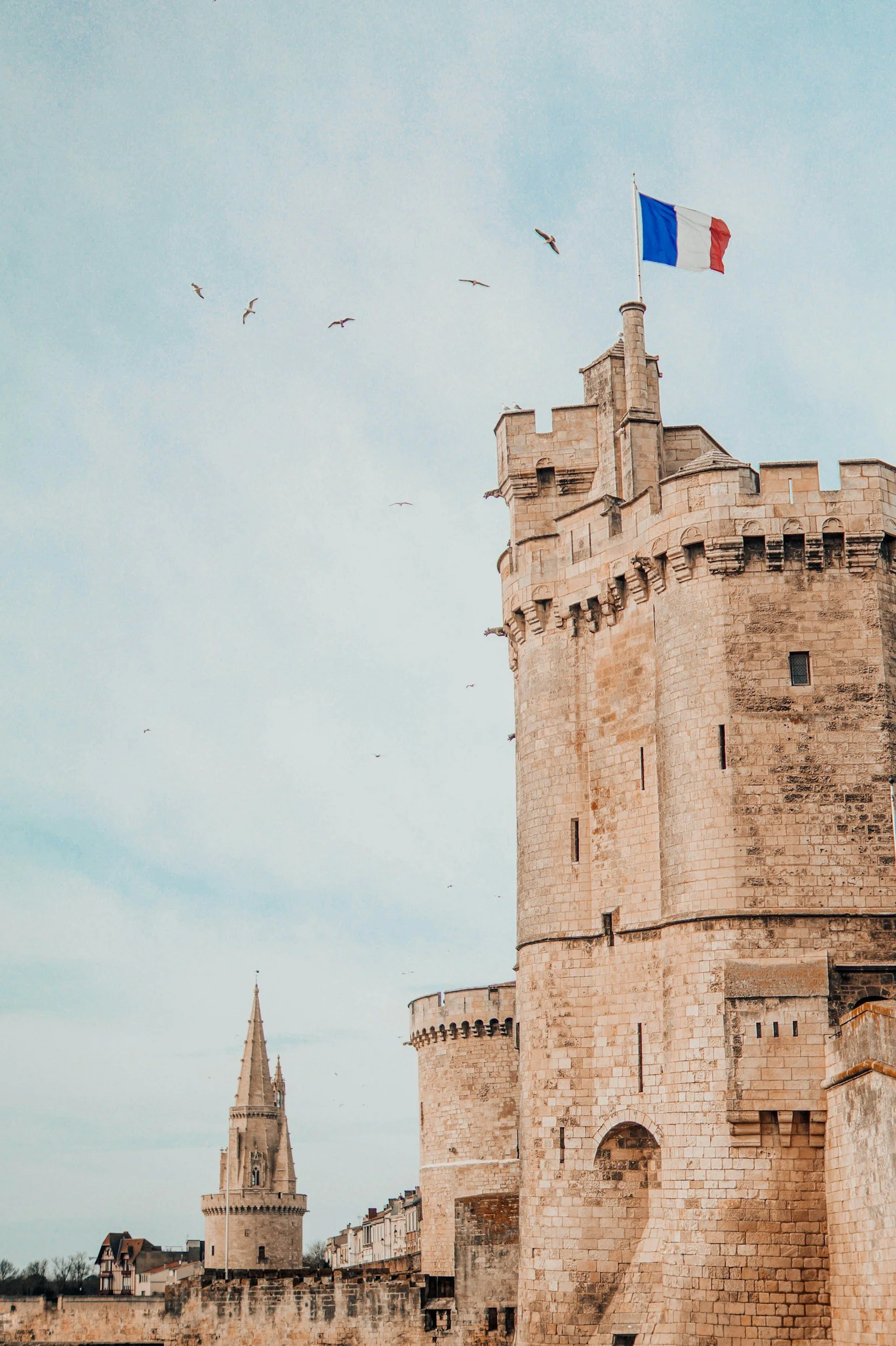
Photo by Romain HUNEAU on Unsplash
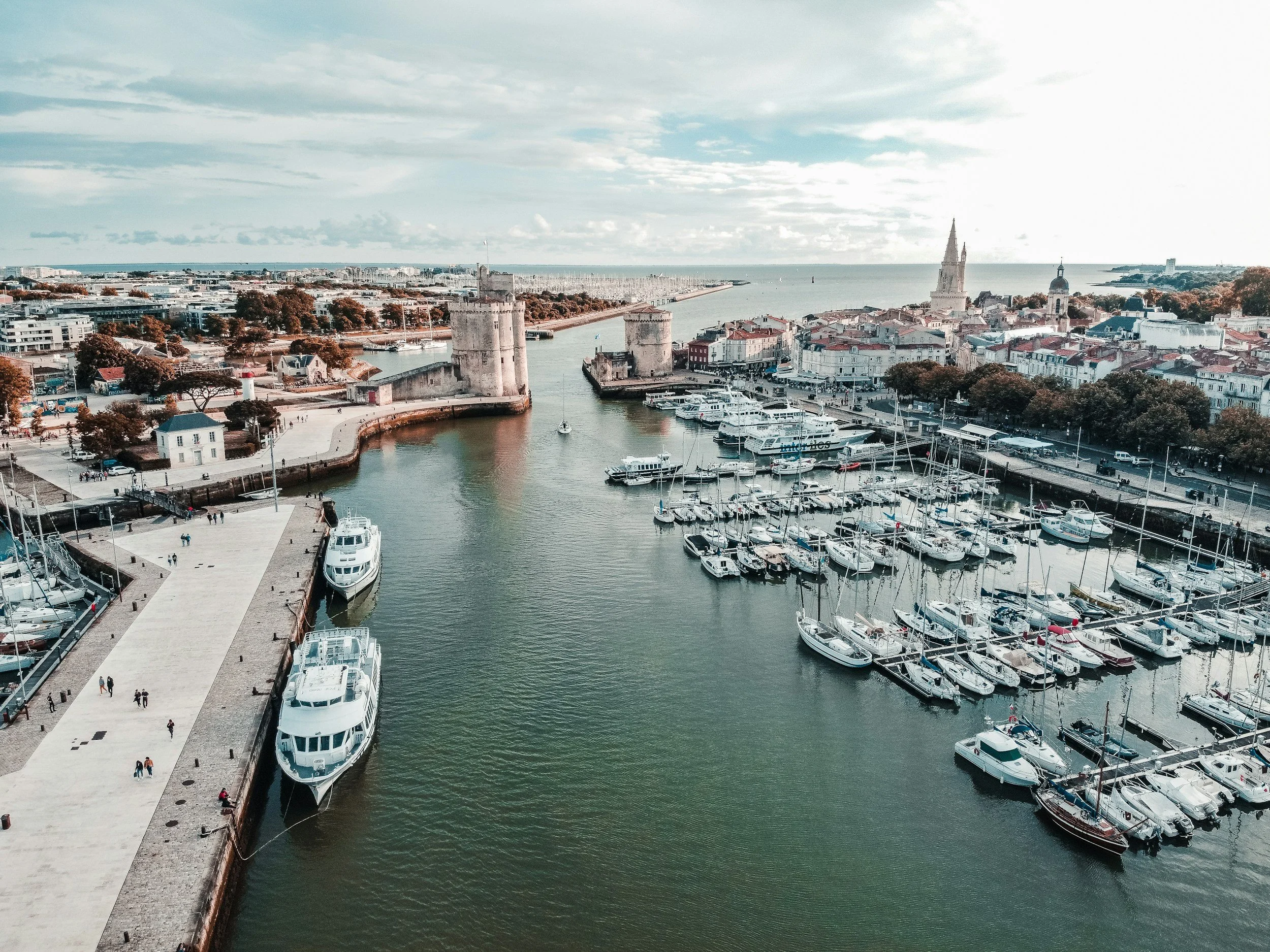
The strongest symbols of La Rochelle are its three towers standing at the entrance of its port: the Tour de la Chaîne, the Tour de la Lanterne and the Tour Saint-Nicolas.
The Saint-Nicolas tower was completed in 1376, and originally it had been named the Chain tower. The great chain that closed the harbor at night was anchored in it, and only in the 15th century was it renamed for Saint Nicolas, patron of sailors, after the district and church it belongs to. The tower we call the Tour de la Chaîne today came a few years later, built between 1382 and 1390, and it is from there that the chain was actually worked.
Nevertheless, there is also a legend.
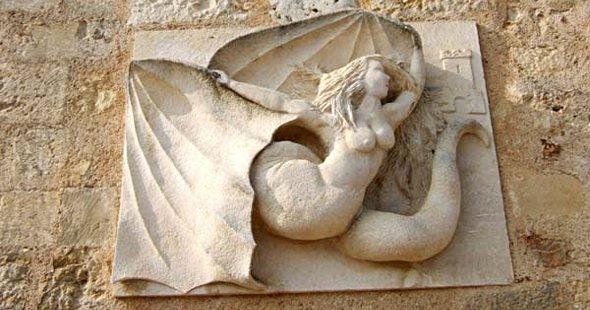
Stone carving of Mélusine in Lusignan
The legend says the towers were dropped from the sky by the fairy Mélusine. Mélusine is a figure of French folklore whose lower body turned to a serpent’s every Saturday, cursed by her own mother, the fairy Présine, as punishment for taking revenge and imprisoning her father with the help of her siblings. Mélusine marries a mortal, Raymondin, on the condition that he must never look at her on a Saturday. She makes him rich and powerful and builds the castle of Lusignan with her magic. However, he breaks his word, and on a Saturday, spies on her in her bath. She then flies away and never comes back. Their descendants become the Lusignan family. On her nights of flight, she crosses the Poitou to the coast, dropping stones that rise the next morning as finished medieval towers.
In truth, the legend was written down in 1393 by Jean d’Arras, at the request of Jean, Duke of Berry, who had recently got his hands on Lusignan and wanted a deep and legendary pedigree to justify holding it. A fairy is a very efficient property deed indeed…
The real beginnings of La Rochelle are earlier and more prosaic. The town takes shape around 1130 under Guillaume X, Duke of Aquitaine, who orders a fortified wall around a settlement growing fast on the strength of its harbor privileges. Then comes his daughter, Aliénor, who marries the king of France, Louis VII, but the marriage is annulled (will be explained in a later article devoted to Aliénor herself), and then marries future Henry II of England. La Rochelle, as part of her duchy of Aquitaine, gains access to English markets and grows into a major Atlantic port trading salt and wine, reaching as far as Northern European cities in the Netherlands.
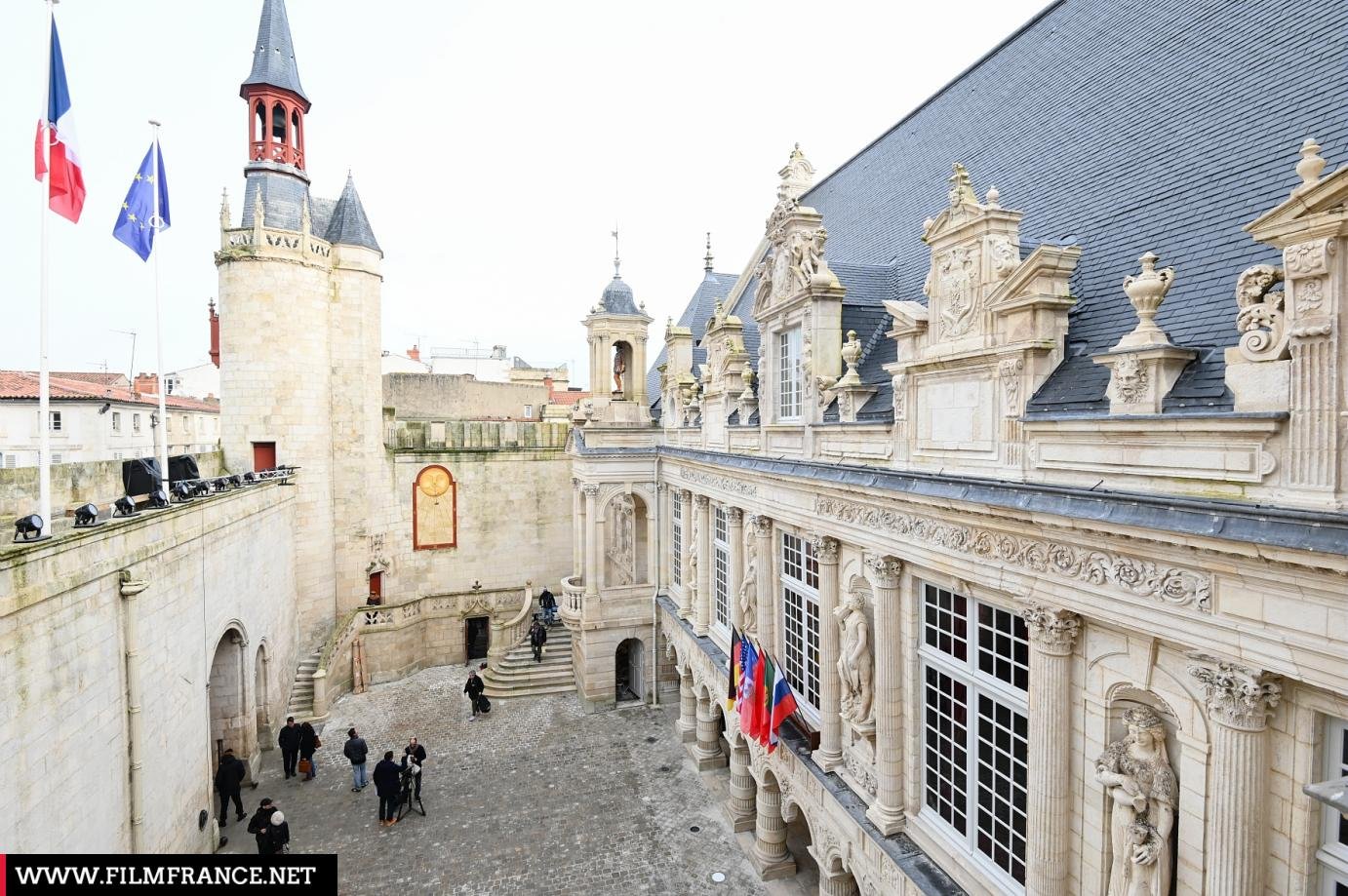
© J. Chauvet
Her most important gift to the city comes in 1199, when she is a widow in her seventies and dowager duchess in her own right. She then grants La Rochelle a commune charter with liberties close to those of a sovereign, and the city elects its first mayor, Guillaume de Montmirail, one of the earliest mayors anywhere in France. The independence that would eventually get La Rochelle destroyed starts here, with a charter granted by a woman.
The Hôtel de Ville (townhall) of La Rochelle is the oldest still in use in France, on the same site since 1298, with a flamboyant Gothic wall and crenellations outside with a Renaissance courtyard inside. A fire tore through it in June 2013, and it took 6 years to reconstruct under the lead of Philippe Villeneuve, the same architect responsible for rebuilding the Notre-Dame Cathedral today; it reopened at the end of 2019. Among the 300 objects rescued from the flames were seals dating from 1199. Aliénor’s charter, in other words, outran the fire.
A stronghold of Protestantism in France
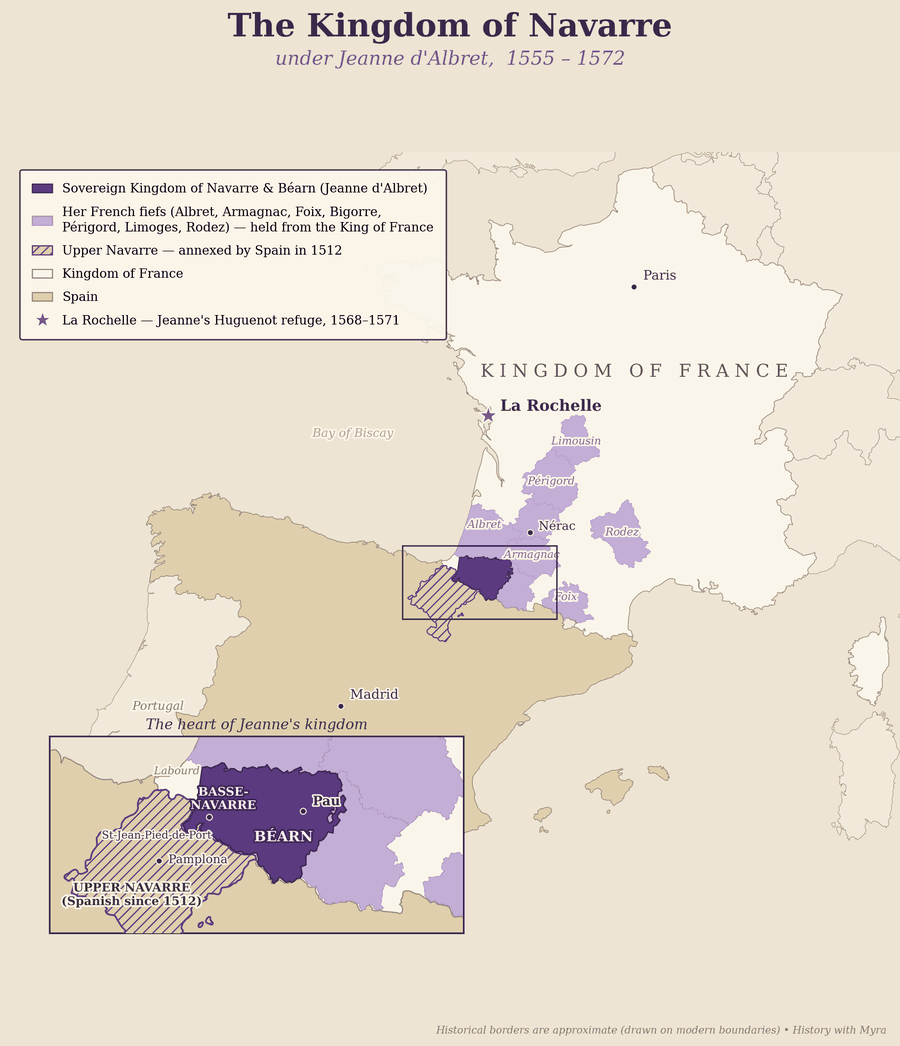
Map of Navarre under Jeanne d’Albret, under Henri IV, he rules them separately. They are then annexed by Louis XIII in 1620 as part of the French kingdom.
On top of its economic and administrative privileges, La Rochelle became, in the 16th century, the capital of French Protestantism. Calvin’s ideas arrived by boat, and the port turned into a refuge for persecuted Protestants across France. Protected by formidable sea walls and sustained by maritime trade with England and the Netherlands, it could afford to be a growing threat to a Crown whose legitimacy rested on the Catholic Church. In 1568 the city elected its first Huguenot mayor and its direction was set. That same year, Jeanne d’Albret arrived.
Jeanne had been queen of Navarre since 1555, a kingdom that by then included Lower Navarre north of the Pyrenees, plus Béarn, Foix, Bigorre and Armagnac, Upper Navarre having been swallowed by Spain in 1512 (see map to the right). She converted to Calvinism in 1560, 5 years into her reign and spent the following decade imposing the new religion on her lands. In September 1568, with the third war of religion under way, she took refuge in La Rochelle with her son Henri (future king of France), then fourteen years of age.

Jeanne d’Albret © Wikimedia Commons
She effectively governed the city. Military matters stayed with Huguenot commanders, but everything else, administration, finances, the feeding and housing of refugees pouring in, was hers. She pawned her own jewels to raise a loan from Elizabeth I of England to keep La Rochelle supplied. Her statue stands in the Luxembourg Garden today (see Interactive Map of the French queens and illustrious women at the bottom of the article), even though she was never queen of France.
It was Jeanne who negotiated the marriage meant to end the wars: her son Henri to Marguerite de Valois, sister of Charles IX and daughter of Catherine de’ Medici. Jeanne and Catherine met at Chenonceau in 1572, Jeanne accepting through gritted teeth that Marguerite would not convert to Protestantism.
Jeanne died in Paris on 9 June 1572, ten weeks before the wedding by tuberculosis. The rumor, however, was that she had been poisoned by Catherine de’ Medici. Nevertheless, the first pamphlet accusing Catherine had only appeared 2 years after Jeanne’s death, during a time where the French public highly disliked the queen. Alexandre Dumas hands the story to a mass readership in La Reine Margot in 1845. Three centuries of retelling, but no evidence.
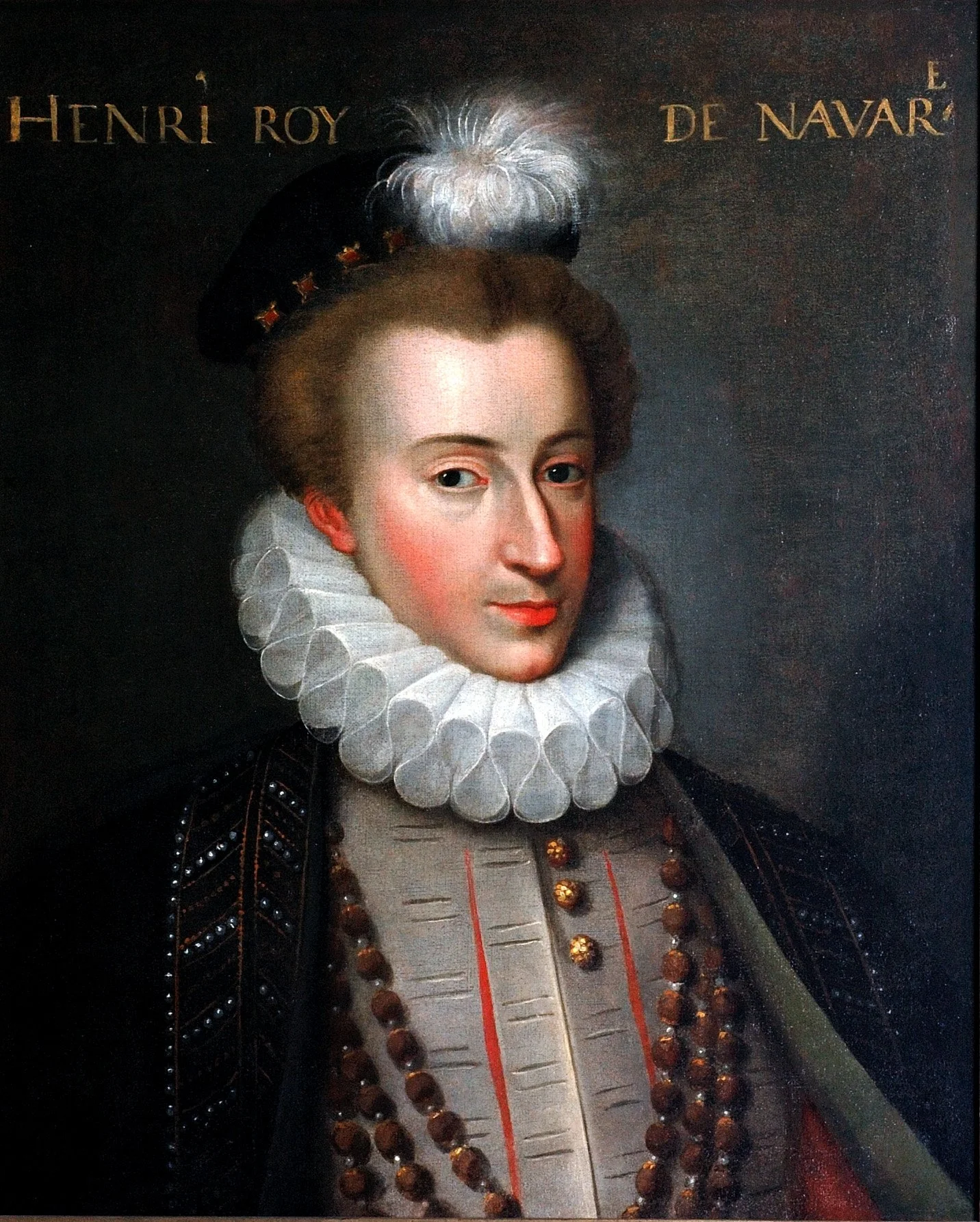
Henri IV © Wikimedia Commons
The wedding went ahead in Paris on 18 August 1572, with Protestant noblemen coming from all over France to escort Henri of Navarre. Paris was violently anti-Huguenot, the match between a Catholic princess and a Protestant prince was widely loathed, and even the Pope withheld his dispensation. Six days later came the massacre of Saint-Barthélemy. The crown had decided to eliminate Huguenot leadership, and then Parisian violence escaped anyone’s control and spread through the provinces for months. Estimates of the dead range from 2,000 to 3,000 in Paris and anywhere from 5,000 to 30,000 across France.
Henri of Navarre, as the king’s new brother-in-law, was spared, with help from his new wife Marguerite. He was also forced to abjure his faith and was held at court for 3 and a half years, escaping in February 1576. This matters enormously, because Charles IX’s brother, Henri III, who took over the throne after him, would die childless in 1589 and recognized Henri of Navarre as heir to the kingdom. Henri of Navarre became Henri IV, the first of the Bourbon dynasty, and spent years fighting the Catholic League, partly funded by Spain before gaining legitimate control over the French kingdom. He eventually converted to Catholicism in 1593, and in 1598 signed the Edict of Nantes granting Protestants freedom of worship, and crucially, for La Rochelle, fortified places of safety.
Henri can be found all over the Hôtel de Ville. His statue stands under the canopy of the staircase and entrance, recognizable with his fashionable pants and beard, one hand on his sword and the other on a commander’s baton. The original statue was destroyed during the revolution, but the current one was built around 1873 in polychrome glazed faience by Théodore Deck, a renowned ceramicist of the 19th century. Henri’s initials, specifically a monogram, can also be found all over the ceiling of the corridor of the inner courtyard, along with his wife’s monogram: Marie de’ Medici. I think we can safely say that Henri IV is La Rochelle’s favorite French king.
The Siege of La Rochelle
La Rochelle thrived under the Edict, free to practice Calvinism. Nevertheless, the peace did not last. By the 1620s, the city was operating like an independent Protestant republic: collecting its own taxes, maintaining an elite fleet, negotiating with foreign powers, England above all. In July 1627, the Duke of Buckingham landed on the nearby Île de Ré with an English force and besieged the citadel of Saint-Martin which was held by a royal garrison. It was meant to lend support to La Rochelle. Nevertheless, he failed and withdrew in November. Dumas would later attach to Buckingham the rumor of an affair with Anne of Austria, Louis XIII’s queen. There was in fact a real and much-discussed incident in the gardens at Amiens between Buckingham and the queen in 1625, but no real evidence of an affair. Dumas’ novel would dramatize this rumor.
To Cardinal Richelieu, La Rochelle’s autonomy was an existential threat to the unity of the kingdom and the authority of the monarchy. He led the siege in 1627.
On land, royal forces surrounded the city, but La Rochelle’s real strength was a harbor that could be resupplied by sea. Therefore, Richelieu had an enormous dyke built across the bay, roughly of a kilometer and a half of sunken ships filled with stone, heavy masonry, artillery and floating batteries. The image of Richelieu on that dyke, sealing the city off, is one of the enduring images of French history, and the painting hangs in the Hôtel de Ville of La Rochelle, where the city keeps the memory of what was done to it.
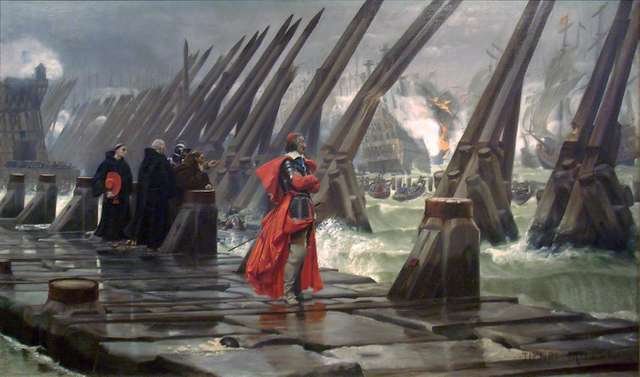
© Wikimedia Commons
Cut off by land and sea, with English relief fleets unable to get through, La Rochelle was left to starve slowly. Jean Guiton, whose name is now inseparable from the siege, was elected in the spring of 1628, more than halfway through, and he refused to capitulate until October. The city surrendered on 28 October 1628, 14 months after the siege began. Figures for the dead vary by source, but the most commonly cited put the population at around 18,000 before the siege and roughly 5,000 survivors.
The Peace of Alès, signed in June 1629, let Protestants keep their freedom of worship, the religious clauses of Nantes would survive until 1685, but stripped away everything else: no garrisons, no political assemblies, no fortified places of safety. Symbolically, La Rochelle’s medieval walls came down, and only 3 towers at the harbor mouth were left standing.
Sidenote: the Towers
The towers were spared. They were kept because they were useful: the harbor still needed defending against the English and the Tour de la Lanterne still worked as a lighthouse.
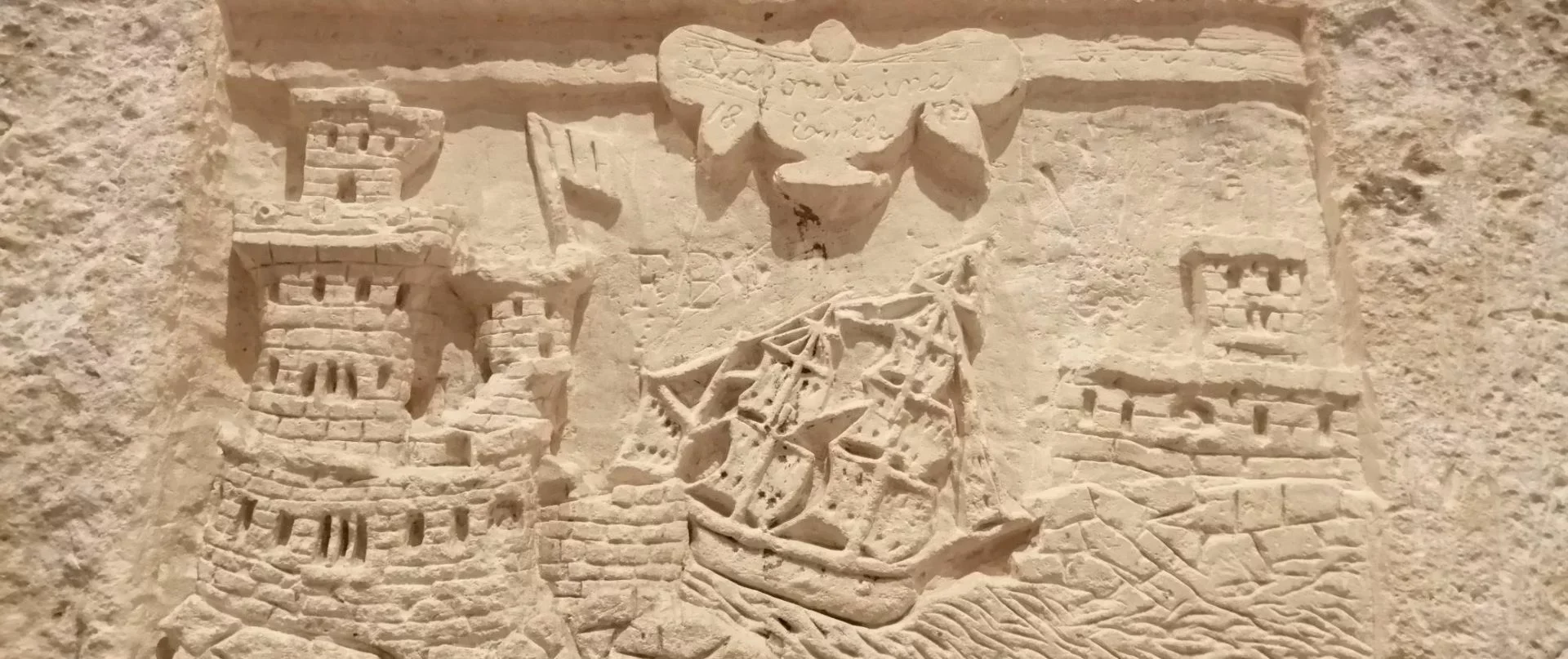
© Centre des monuments nationaux - Sébastien Arnault
The Tour de la Chaîne paid for that usefulness, serving as a powder magazine, it exploded in 1651 during the Fronde, losing its roof, machicolations and all the upper floors. It stood open to the sky for centuries, cut down to about three quarters of its original height, and only got a new roof from the 19th century into the 21st. Looking at the tower today, we are only seeing part of it.
The Tour de la Lanterne, the prettiest of three, holds more than 600 pieces of graffiti carved into its walls from the inside. It had been a prison across centuries. In 1568, during the Huguenot rule of the city, Catholic priests were held there, then killed and thrown from the top of the tower into the sea. In the 17th and 18th centuries, it took corsairs and foreign prisoners, English, Scottish, Dutch, Spanish, who left ships, names and dates cut into the stone.
After Louis XIV revoked the Edict of Nantes in 1685 (the Revocation), the towers of Saint-Nicolas and the Chaîne became prisons for Protestants. In the 19th century they served as military prisons.
Sidenote: Jean Guiton
© Wikimedia Commons
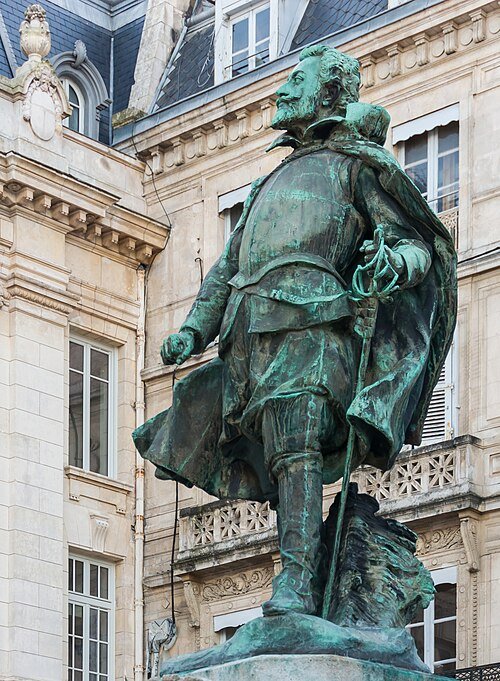
Outside the Hôtel de Ville stands Jean Guiton’s statue, chin up, one hand on his sword. The pedestal says: À Jean Guiton, maire 1628 (To Jean Guiton, mayor 1628). It took seventy years to get him there. The council first voted for a statue in 1841 and the government refused — a bronze mayor who had defied a king of France was not something any French government of that decade wanted standing outside a town hall. Permission came by decree only in 1873, under the Third Republic.
The interesting story behind this statue is that it was made possible by Americans. New Rochelle, New York, was founded in 1687 by Huguenot refugees from La Rochelle, Saintonge and Poitou who fled to North America after Louis XIV revoked the Edict of Nantes, and to them Jean Guiton was the man who had held out for their faith during the siege by Louis XIII. Their national bank helped pay for the monument the French state had spent decades refusing. Both cities’ coats of arms are carved into the pedestal.
A New Rochelle delegation sailed over in 1911 for the inauguration, bringing a Gilded Age silver friendship cup commissioned from Tiffany & Co. You can see it if you take the guided tour, in the room kept as Guiton’s office, along with the death mask of Henri IV.
La Rochelle and its role in the Slave Trade
The siege did not finish La Rochelle economically. It remained one of France’s most important ports, and as France expanded into North America and Louisiana, it became one of the main points of departure, the last sight of home for generations of migrants to New France. It also became a slaving port. Most French ports turned to the trade in the 18th century. La Rochelle was sending ships in the 16th: the first known Rochelais slaving voyage, L’Espérance, left in 1594 for Portuguese Brazil. That is nearly a century and a half before the trade became the city’s principal business.
427 expeditions is what is mostly quoted in La Rochelle, but this number comes from historian Henri Robert’s count of slaving voyages leaving the city between 1710 and 1792, carrying an estimated 130,000 captives. It doesn’t include the 45 known expeditions between 1670 and 1692, or 4 illegal voyages in the 19th century after the trade was banned. The Trans-Atlantic Slave Trade Database counts 483 expeditions from La Rochelle between 1643 and 1831, with an estimated 165,368 people put aboard, and only 136,338 arriving on the other end alive.
I ask you to sit with the gap between those last two numbers. Roughly 29,000 died on the crossing, on La Rochelle’s ships alone.
By the 18th century, La Rochelle was no longer a first-rank French port at all, it had become 5th or 6th, and the loss of Canada in 1763 cost it something to a quarter of its commerce. Nevertheless, it held second place among France’s slaving ports for the entire century, behind Nantes and ahead of Bordeaux and Le Havre. As the rest of its trade fell away, La Rochelle’s merchants put more and more of what they had left into the one business still paying. The city didn’t drift into the trade but chose it, as other options closed. Most of those ships went to Saint-Domingue, today’s Haiti, which absorbed nearly 60% of the captives La Rochelle carried. The pull was sugar: Saint-Domingue’s sugar travelled better than its rivals’ and came back to La Rochelle as molasses to be worked in the town’s own refineries.
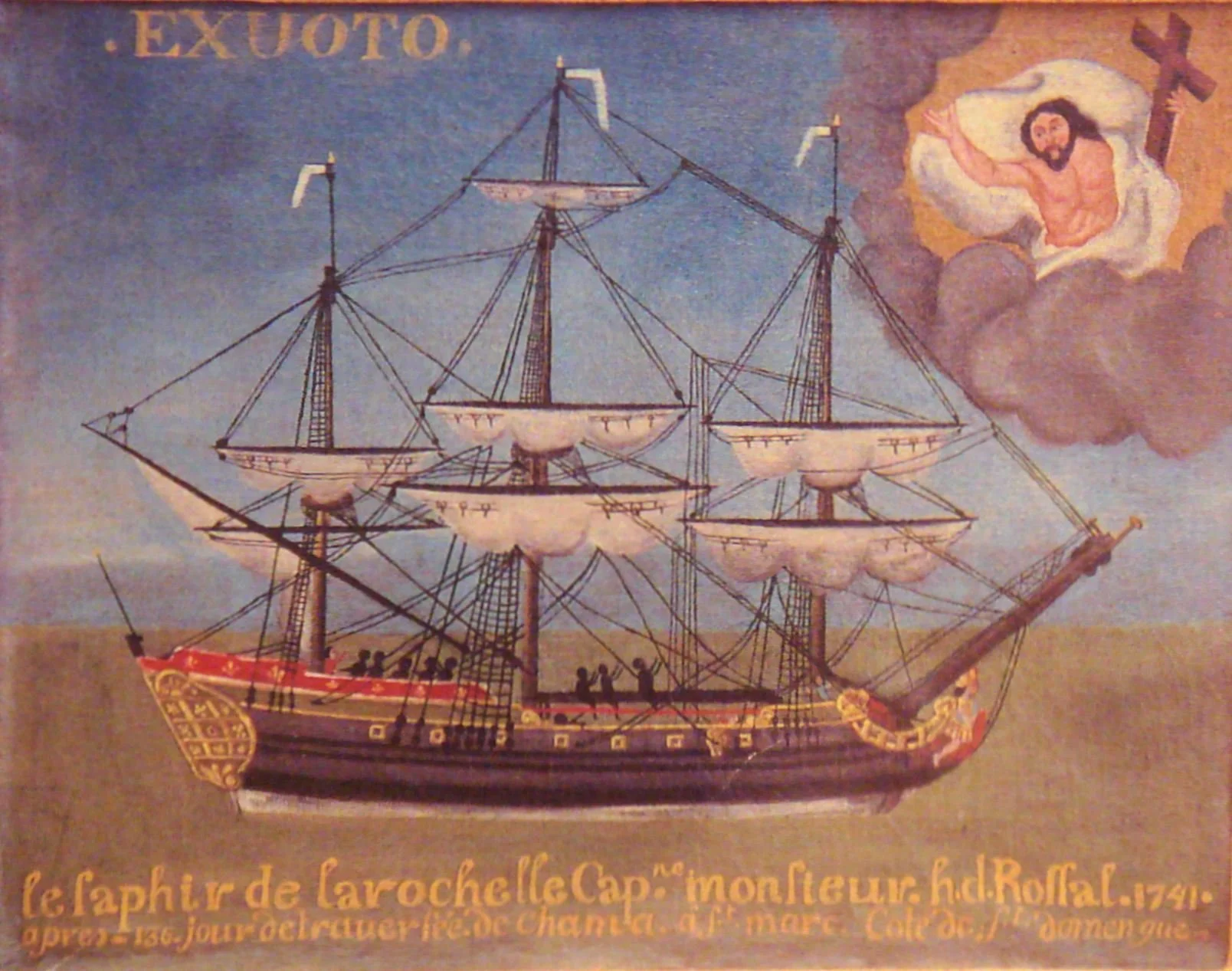
Painting of the slave ship Le Saphir, painted in 1741, showing the slaves and sailors praying to Christ because of the lack of wind which stalled the ship during its second trip to 136 days instead of the half, resulting in the deaths of 54 captives and 16 sailors. The ship then arrived in Saint-Domingue. © Wikimedia Commons
“A business for ordinary people” is the title the Charente-Maritime archives gave their 2010 exhibition on the subject, and it’s what the triangular-trade diagram in school textbooks do not show. The exhibition chose a provocative title for us to interrogate the trivialization of this trade. Nor will they teach you that the slave trade was referred to as “Le commerce du bois d’ébène,” the trading of “ebony wood” which for English traders used “black ivory,” a similar metaphor. Two languages using precious material to describe the inhumane trading of people says it all.
It is tempting to imagine a handful of monstrous shipowners, but the reality is that it was a whole city’s economy. The capital came from dozens of merchants who raised money across the kingdom, and from Paris, London, Barcelona and Basel. The voyages fed the workshops and warehouses where the trade goods for buying people in Africa were made and stored, the notaries and accountants whose paperwork marked every stage, the shipyards, and several hundred sailors a year, plus the carters and dockworkers on the quays. Everyone’s livelihood touched this trade.
Financing was deliberately kept about half local, so the shipowners retained control, but from 1785 the Rochelais were putting up under 60% and Parisian capital moved in. Of 427 expeditions, only 17 shipboard revolts are known to us: 4% of the expeditions. However, historians who work on this assume the real figure is higher, since a rising crushed at the start left no paper trail behind. When the trade ended, many shipowners destroyed their books. Of hundreds of voyages, just 97 investment declarations survive in the admiralty registry: ship name, tonnage, owner, backers, and the share each put in. The people who profited also got to decide what we would be able to prove. That silence is not an accident of time, it’s a deliberate act which is part of the history.
In 1790, the city’s merchants founded the Société des colons franco-américains precisely to defend slavery and their interests in it. The last slave ship, the Saint-Jacques left on 26 April 1792. The revolution in Saint-Domingue stopped the trade. A case that clearly shows the impact of the revolution is the election of Daniel Garesché as mayor in 1791. He owned the Comte de Forcalquier, the largest slave ship La Rochelle ever sent out. The Saint-Domingue revolts destroyed his business, and he had to resign as mayor the following year (learn more by watching the Secrets d’Histoire episode on Toussaint Louverture which also includes a lot on La Rochelle).
Since May 2021, seven streets have explanatory plaques under their name signs. At its inauguration, Mayor Jean-François Fountaine said: “Our city has a colonial history. We are not about repentance, we are about knowledge” (Notre ville a un passé colonial. Nous ne sommes pas dans la repentance mais dans la connaissance). Walking rue de l’Armide, between the Vieux-Port and the bassin des Chalutiers, you will read that the street is named after the ship l’Armide which had served during the slave trade belonging to Pierre-Gabriel Admyrauld. Rue du Saphir comes from shipowner Élie Giraudeau naming his slave ships after precious stones (see picture above of the Saphir ship). There is also square Rasteau, rue Admyrauld (shipowner of l’Armide which I mentioned earlier), rue Garesché (the mayor who had to resign and also owned the largest slave ship ever sent out which I also mentioned above), and rue Demissy, named after a slave trader who then joined the Société des amis des Noirs, an abolitionist association. See all the plaques and their explanations here.
One plaque clears the name of naturalist Louis-Benjamin Fleuriau whom many had assumed to be implicated, but who actually never directly took part in the trade himself. Nevertheless, his forebears had, and he had also inherited the indemnities which were handed out after the abolition of slavery. This family name is important, because it is the family whose hôtel is now the building that is the Musée du Nouveau Monde opened in 1982. Hôtel Fleuriau belonged to the Fleuriau family whose money came from sugar plantations near Port-au-Prince. The Museum’s first floor covers the history of the slave trade and La Rochelle, and the all the upper floors cover La Rochelle’s relationship with the Americas with sections on trade, colonial production, the abolitions, New France and the independence of the United States.
© History with Myra
A number of the paintings in the exhibition feature Black nursemaids or household servants that had been brought to La Rochelle, showing that the slave trade did not just concern sending ships of captives to the Americas, but it was also inside the houses of the elite merchant class, holding the children, sitting for portraits. The art-historical point this made, was that Black servants would appear in European portraiture during this period as markers of wealth. Their presence in the frame was part of the display and used for a specific purpose. Nevertheless, slavery on French metropolitan soil which had no legal standing, and in fact, enslaved people brought to France could and did sue for their freedom in the Admiralty courts. An example I will bring up later is that of Clarisse.
One thing I disliked about the museum was that the exhibition on the slave trade was only in French, all the upper floors were in French and English…
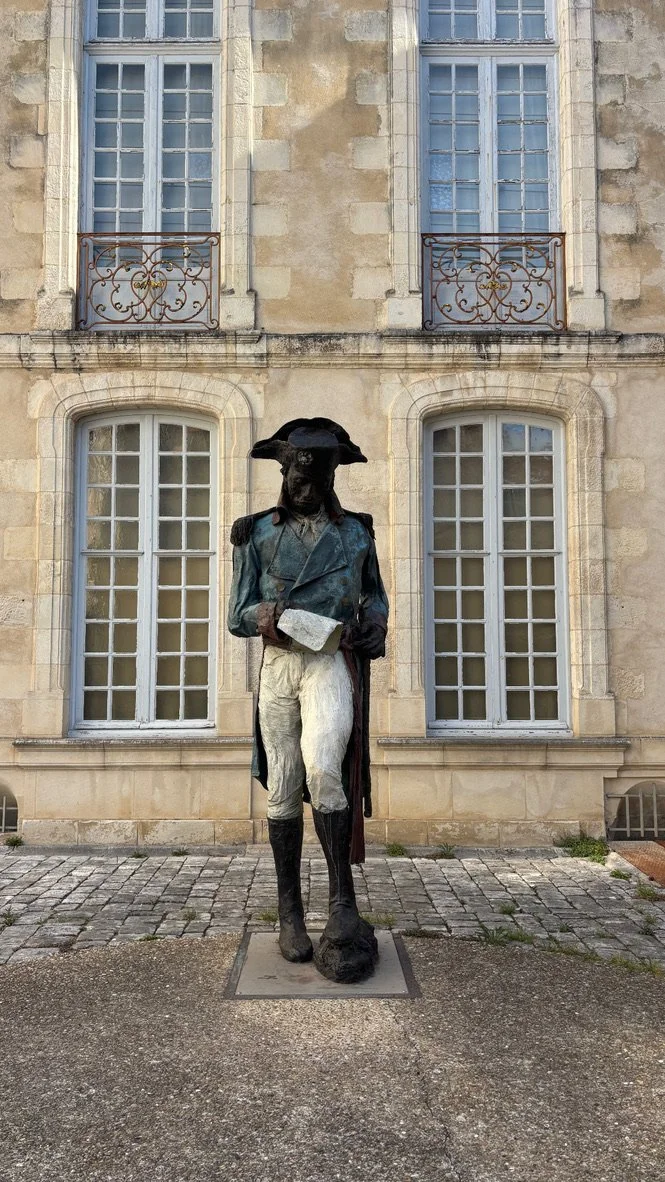
In the courtyard of the museum stands Ousmane Sow’s Toussaint Louverture statue: 2.80 meters of bronze, inaugurated on 20 May 2015. General Louverture reads the constitution of Saint-Domingue which led to his arrest. A symbol of the abolition of slavery, the placement of his statue caused a debate. Associations argued for it to be placed by the port, where the ships actually left, to be shown to the crowds of tourists on the quays, and not in a courtyard of a slaveholding family’s mansion. The mayor at the time stated that an enslaved man standing in the masters’ house is not revenge but reconciliation. Sow also approved of the placement.
© Aurélien Faidy
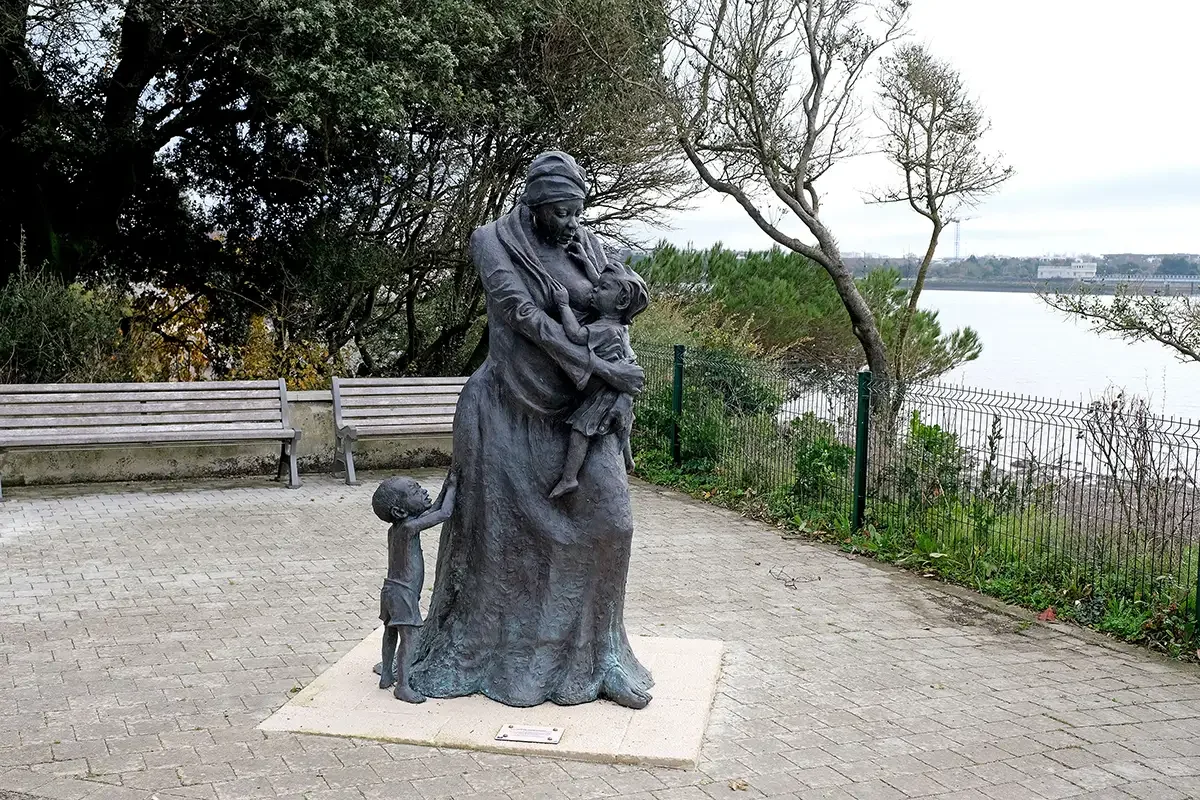
Nine years later, on the national day of remembrance for slavery, a second bronze statue was unveiled behind the casino facing the harbor mouth where the slave ships once passed. Made by Haitian sculptor Woodly Caymitte, also known as Filipo, the statue is called Clarisse, nourrice esclave: Clarisse, enslaved nursemaid. She stands nursing a plump white infant while her thin son pulls at her skirt. Clarisse did indeed exist. Historian Olivier Caudron found her in the city archives: bought in Saint-Domingue by a La Rochelle surgeon named Granville and brought back with him, she was then summoned before the conseil général in 1793 and told that she was free and held the same rights as any other woman of the Republic. There is no proof that she worked as a nurse in Granville’s household after that, only probability, but she was chosen as a symbol of all the Black women who did work as nursemaids and fed the children of the city that had bought them. Sadly, the statue was vandalized within weeks of its unveiling.
Reflections on La Rochelle
After a week of getting food at the beautiful indoor market, visiting towers, going to the beach, boat rides and bike rides through fields on Île de Ré, La Rochelle is a city I truly enjoyed visiting. I encourage you to visit La Rochelle and to reread this article if you ever do. Don’t hesitate to send me an email or message, I’d love to know whether you enjoyed the city as much as I did! Exploring the history of the city across all of its periods was extremely enriching. You can see that this city fought hard to keep its independence. Its own motto clearly reflects that: “La Rochelle, belle et rebelle” (La Rochelle, beautiful and rebel). I have my passion for kings and queens, although I do not admire their behaviors and actions, but I also have a passion for decolonizing history and not overlooking tragic and real events. I appreciated the work that the city did concerning its history of slave trade, and reconciliation and memory work, though it is not enough based on the staggering amount of riches that were made on the back of slavery.
This is a hard topic to speak about in France, and not enough developments have been made. Nevertheless, this year on 18 April, the Mât de la Fraternité was inaugurated in Nantes, during which Pierre Guillon de Princé, 85 years old, a descendant of Nantes slave traders and slave owners, apologized for the actions of his ancestors in front of the ambassador of Haiti to France, Louino Volcy, descendants of slaves, and the community gathered. He was careful to say that he did not consider himself guilty, but did consider himself responsible, and that the first injury done to those who were enslaved and colonized was psychological. De Princé is also the co-founder of La Coque Nomade - Fraternité an association that works on the history of slavery, run with his friend, co-founder Dieudonné Boutrin, a descendant of enslaved Martinicans. I had the pleasure of meeting both whilst I worked on the UNESCO Global Forum against Racism and Discrimination in Barcelona in 2024, and can say that they were extremely devoted to the cause of raising awareness and on building memory work and reconciliation concerning the history of slavery in France. Their friendship had moved me; it seemed all the more genuine as they did interview after interview with the Spanish press. This type of declaration by de Princé had never been done before in France. Foundations, associations and cities have advanced on the question of memory of slavery, but the state and the families who profited from it have largely not. De Princé’s speech could be the start of a wave of awakening amongst the class of people that benefitted from slavery and how they can contribute to the development of memory and reconciliation work.
Perhaps more is to come in La Rochelle: memorials, statues, and ways to also bring thoughtful conversations to the forefront whilst visiting the city.
"La Rochelle, belle et rebelle."
Below is an interactive map of the places I visited in La Rochelle, and a timeline of all the events mentioned above. Feel free to use it when it’s your turn to visit! Hover over the monuments for a brief description.

La Rochelle, in order
Nine centuries of the city's history, from a fortified wall on the Atlantic coast to a bronze statue unveiled in 2024. Tap any entry to read more.
Dates for the slaving expeditions follow Henri Robert's count for 1710–1792; the Trans-Atlantic Slave Trade Database uses a wider range and reaches different totals.
Places I liked to eat at!
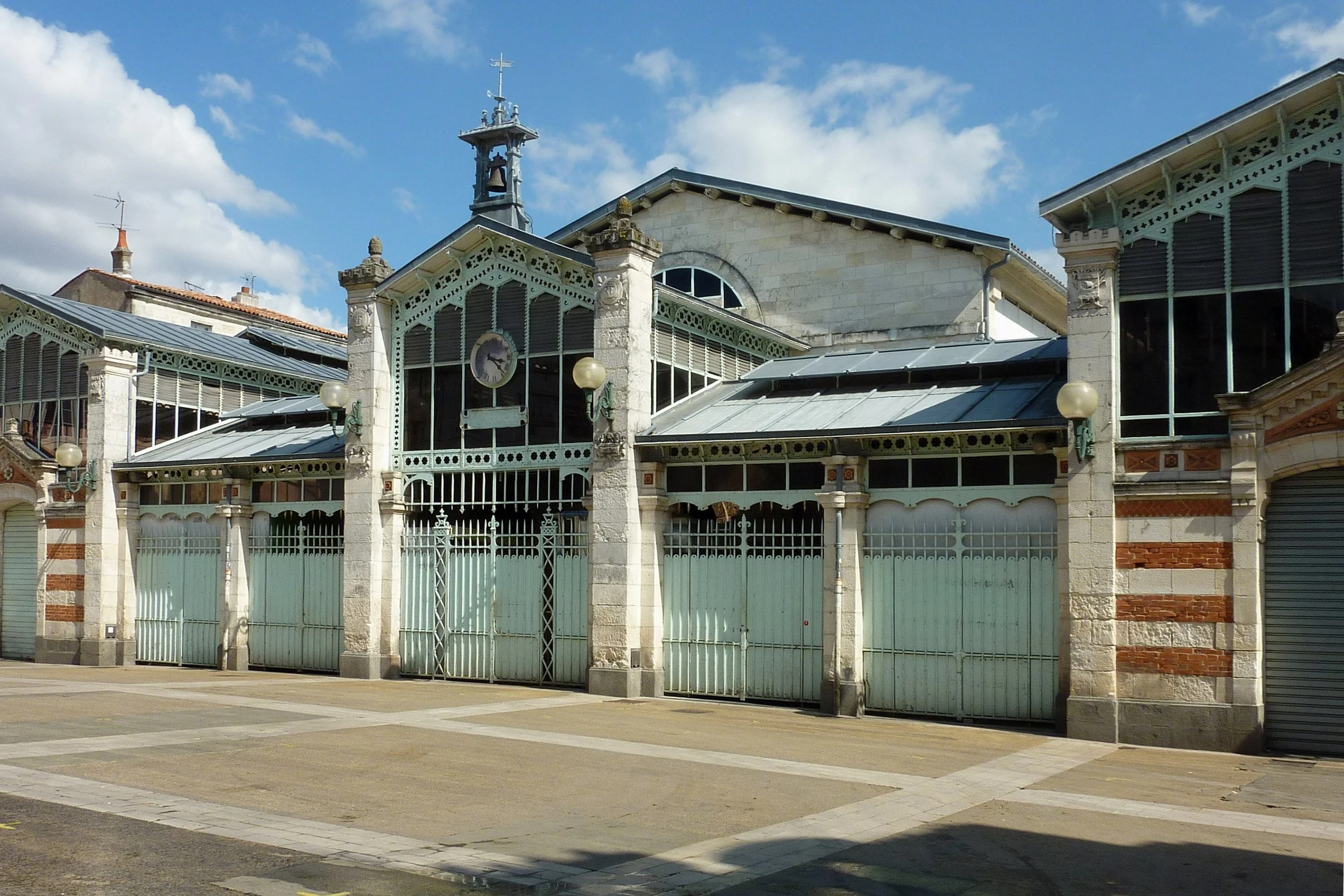
La Rochelle’s covered market © Wikimedia Commons
La Rochelle’s covered market. We went there about 4 times, and got dried ham, fresh seafood, we tried the mussels specialty of La Rochelle: La mouclade charentaise. We then did a picnic at multiple places: Parc Charruyer, and even better for sunset at the Beach la Concurrence (though warning! around night time it becomes the place to be for middle schoolers, high schoolers and young university students, so perhaps don’t stay there too late if the sound of 5 different basses kicking trap music or classic french music bothers you)
Iséo restaurant - a fusion of French and Thaï seafood right next to the Tour de la Chaîne, on the Old Port. There is usually a line, so get there early!
Restaurant Eïla - Mediterranean food with good seafood dishes. We loved the ceviche and gambas risotto!
Source recommendations:
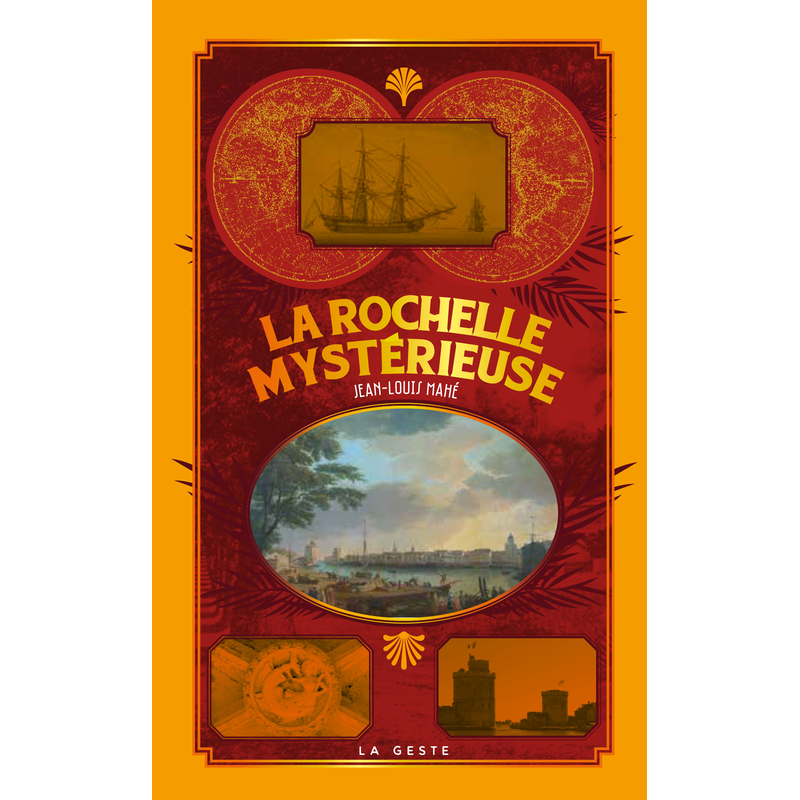
I bought this book in the Tour de la Chaîne bookstore and took it with me everywhere, reading on the boat, beach, cafés. You will learn a lot about La Rochelle and uncanny stories!

Click on the picture for NicoLaRochelle’s tiktok videos which I found very interesting while visiting the city. He showcases fun facts of the city and mostly all the places I talked about above.

Click the image to access the documentary if you have Secrets d’Histoire access.
Sources
The legend and the city's origins
L'histoire de Mélusine — BnF Essentiels
Histoire — L'Hôtel de Ville — La Rochelle Info
Monument à Jean Guiton — Inventaire général du patrimoine culturel, Nouvelle-Aquitaine
Religion and the siege
Jeanne d'Albret et La Rochelle (lettre 69) — Musée virtuel du protestantisme
La rue Jeanne d'Albret — La Genette
Pourquoi Richelieu a-t-il organisé le terrible siège de La Rochelle ? — Historia
The slave trade
L'histoire négrière au coin de la rue — Ville de La Rochelle
Passé colonial de La Rochelle : des plaques de rue plus explicites — Sud Ouest
Rue Le Saphir — Balades à La Rochelle (32) — En lisant, en écrivant
Le commerce du « bois d'ébène » — La Liberté
Un commerce pour gens ordinaires (2010) — Archives de la Charente-Maritime, via FranceArchives
Trans-Atlantic Slave Trade Database — SlaveVoyages
Memory work
Statue de Toussaint Louverture à La Rochelle — Fondation pour la mémoire de l'esclavage
Toussaint Louverture, la liberté à tout prix — Secrets d'Histoire
Descendants d'esclaves et d'armateurs négriers, ils s'unissent pour la mémoire et contre le racisme — France 24, 18 April 2026
Lors d'une cérémonie inédite en France, un descendant d'esclavagistes présente des excuses pour les crimes de ses ancêtres — France 3 Pays de la Loire, 19 April 2026
