The Garden of the Queen(s)
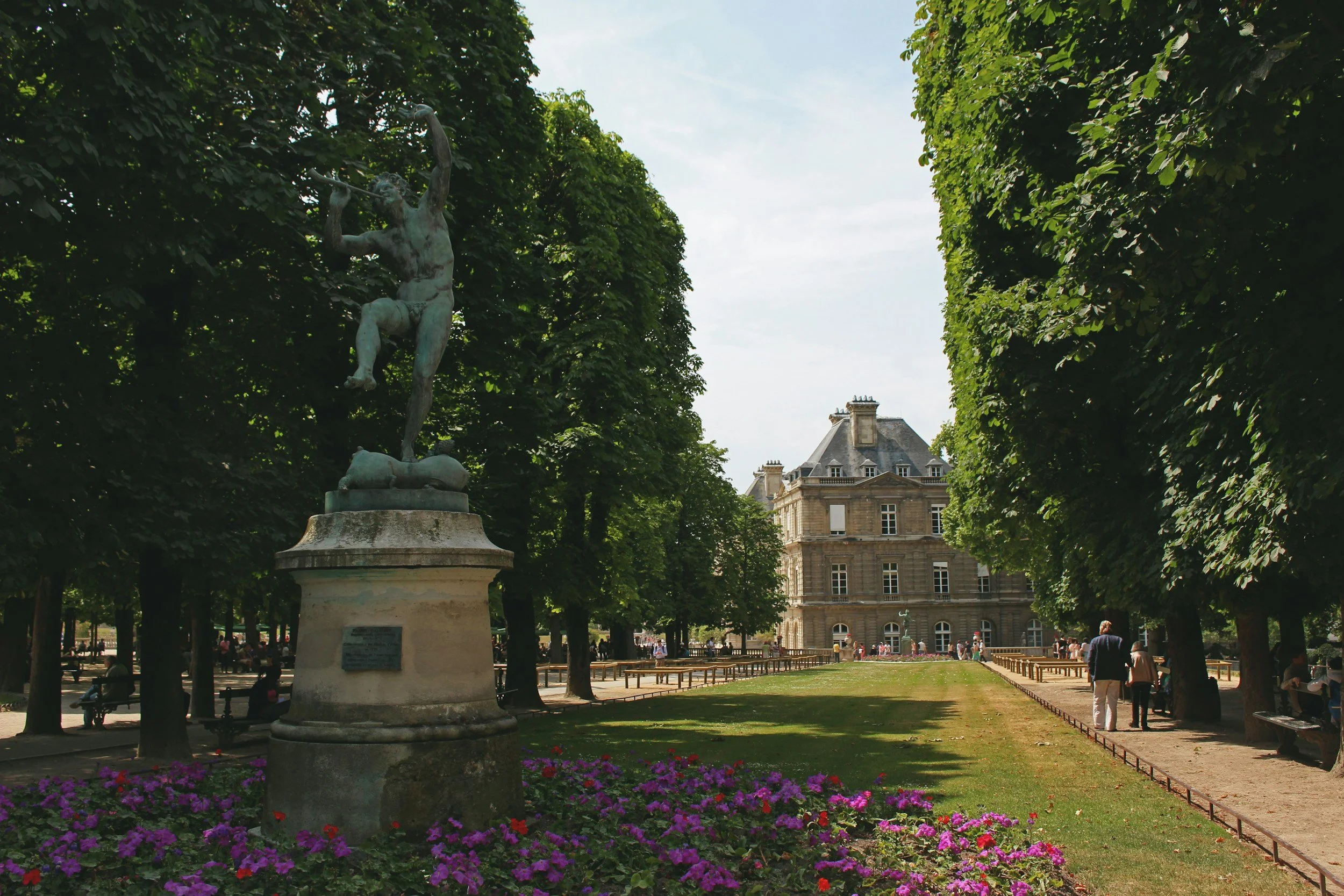
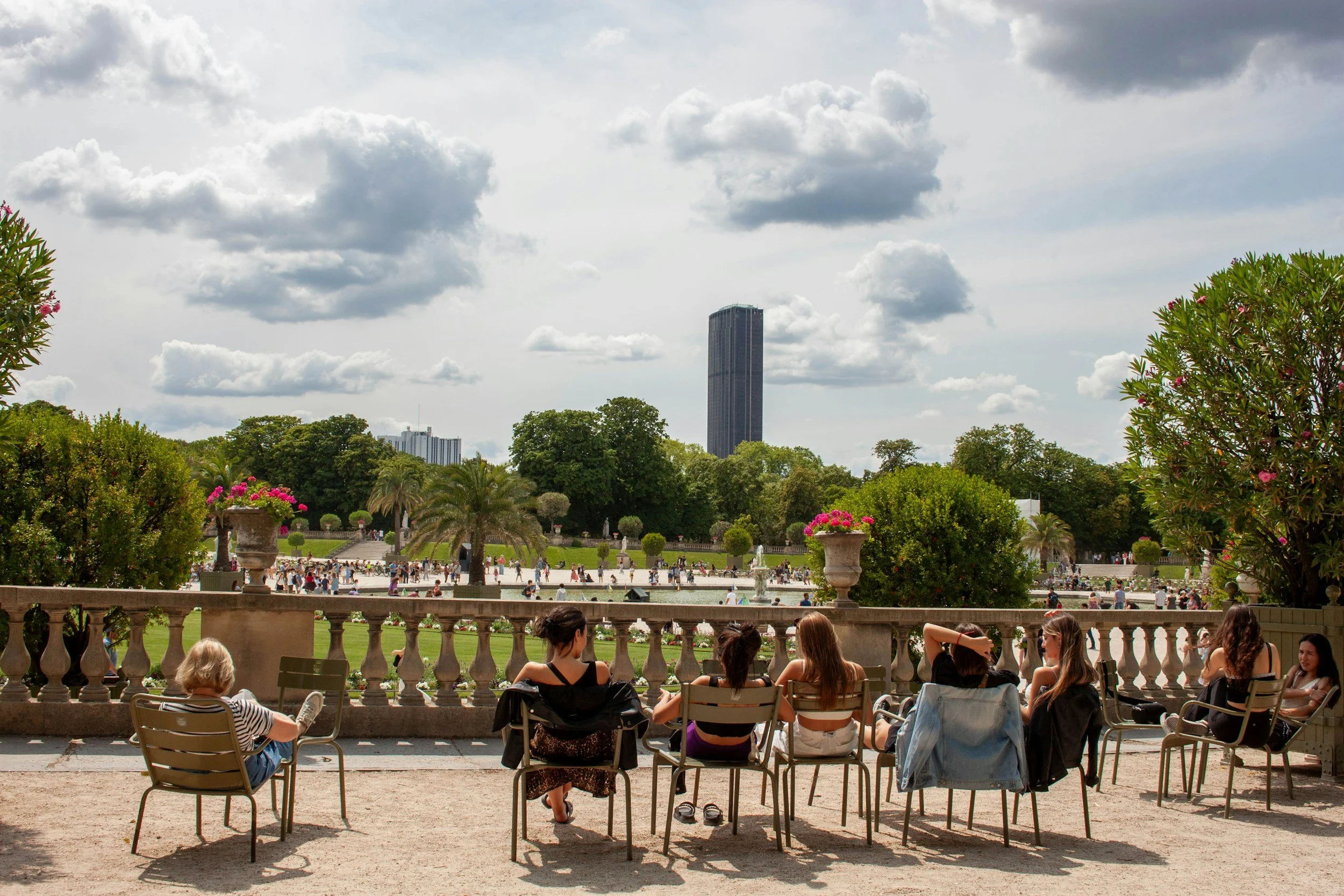
For your first journey with me, I am taking you to the Jardin du Luxembourg. This magnificent garden is arguably Parisians' favourite, and it is also mine. Walk around and you will see a cocktail of tourists and locals sitting on chairs, chatting, reading, playing chess, and playing tennis — all the while important laws are being voted on in the Senate (picture above).
The Garden has many names: the Luxembourg Garden, the Senate Garden — but I like to call it the "Garden of the Queens." It was commissioned by one of France's most famous queens: Marie de' Medici. She is my main character of the week. You might have heard of the Medici family, perhaps Italy's most historically notorious. They held power in Florence, the centre of art in Europe during the Renaissance, and they were the patrons of Michelangelo, Leonardo da Vinci, Botticelli, and Donatello, and the House of Medici produced four Popes.

Portrait of Marie de' Medici by Frans Pourbus the Younger, Musée du Louvre.
Public domain via Wikimedia Commons
Marie married the King of France, Henry IV, in 1600, becoming Queen of France until 1610, when Henry was assassinated. He is one of only two French kings killed by religious fanatics, but I will keep that story for another post. Henry IV was France's first and only Protestant king, while Marie was devoutly Catholic. Theirs had been a strategic marriage: Henry needed the support of both Protestants and Catholics. Marie served as regent until 1617, when her son Louis XIII exiled her to the Château de Blois — weary of her conspiracies and her grip on the government.
A Palace to the likes of Florence
In 1612, 2 years after Henry IV’s death, and clearly homesick, Marie decided to build a palace that would remind her of the Pitti Palace in Florence. She had always struggled to settle in France; it was well known that she never spoke French fluently.
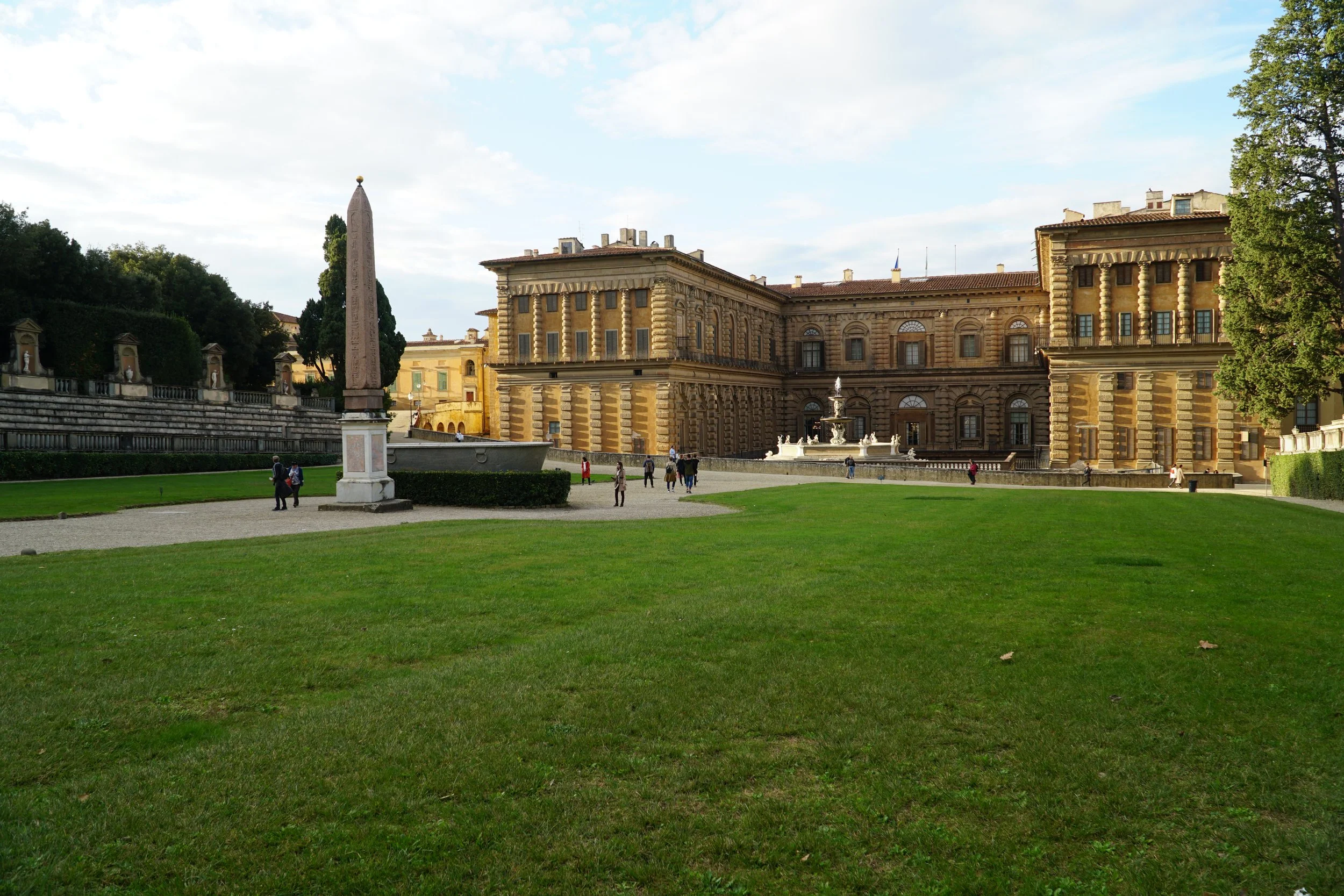
Pitti Palace, Florence, Italy. Photo by Deb Nystrom / Flickr. CC BY-NC 2.0.
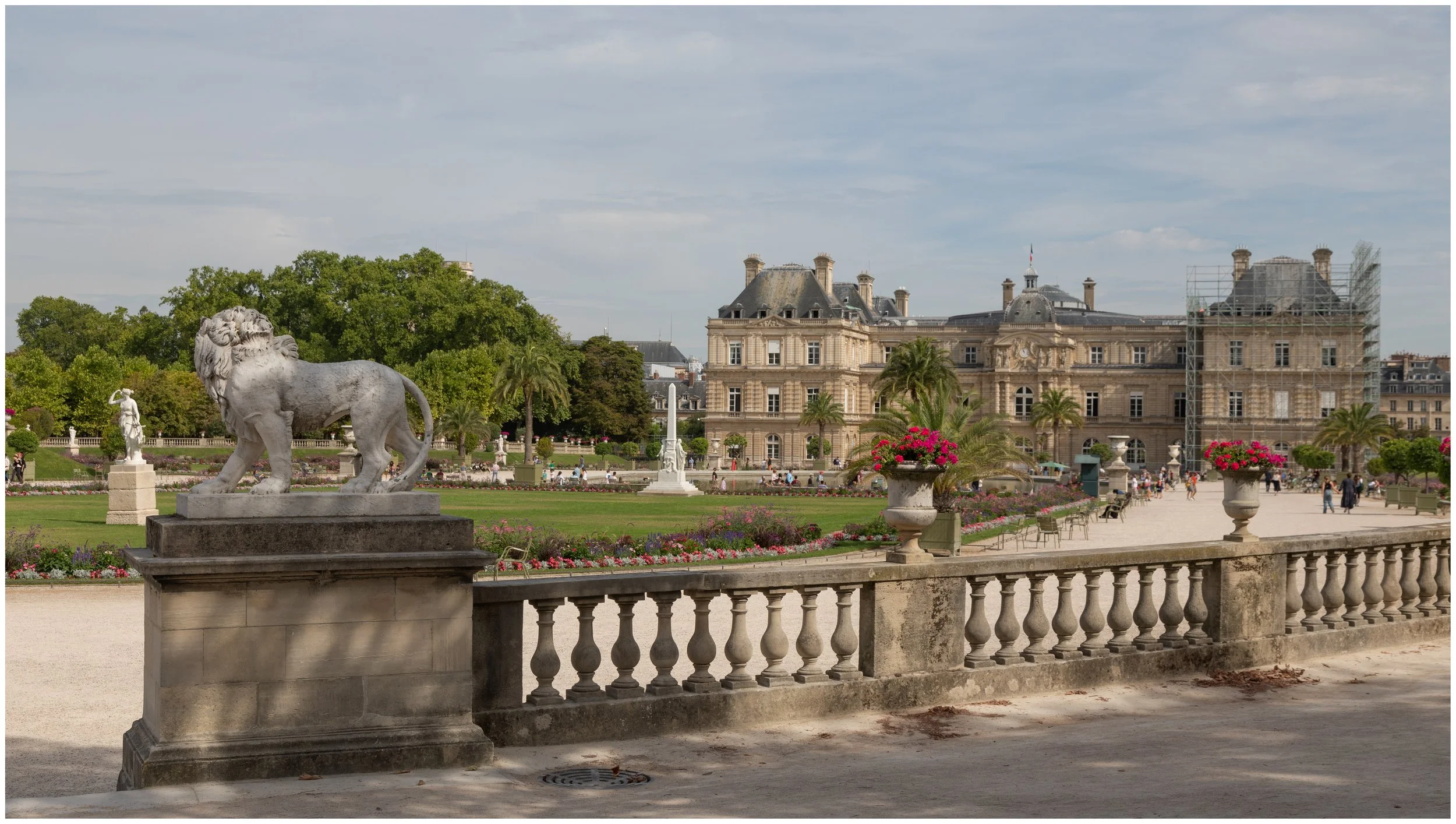
Luxembourg Palace/the Senate, Paris, France. Photo by Martha de Jong-Lantink / Flickr. CC BY-NC-ND 2.0
She bought the palace and garden, which was then called the Petit Luxembourg (Small Luxembourg), from François, Duke of Piney-Luxembourg, a friend of the royal couple. It was a simple townhouse with three wings; you can still find it today. The grounds now still hold the Duke’s name. Before its purchase, the queen would often come to enjoy the tranquility of the place with her young children. The Dauphin Louis enjoyed playing and hunting in the duke's garden.
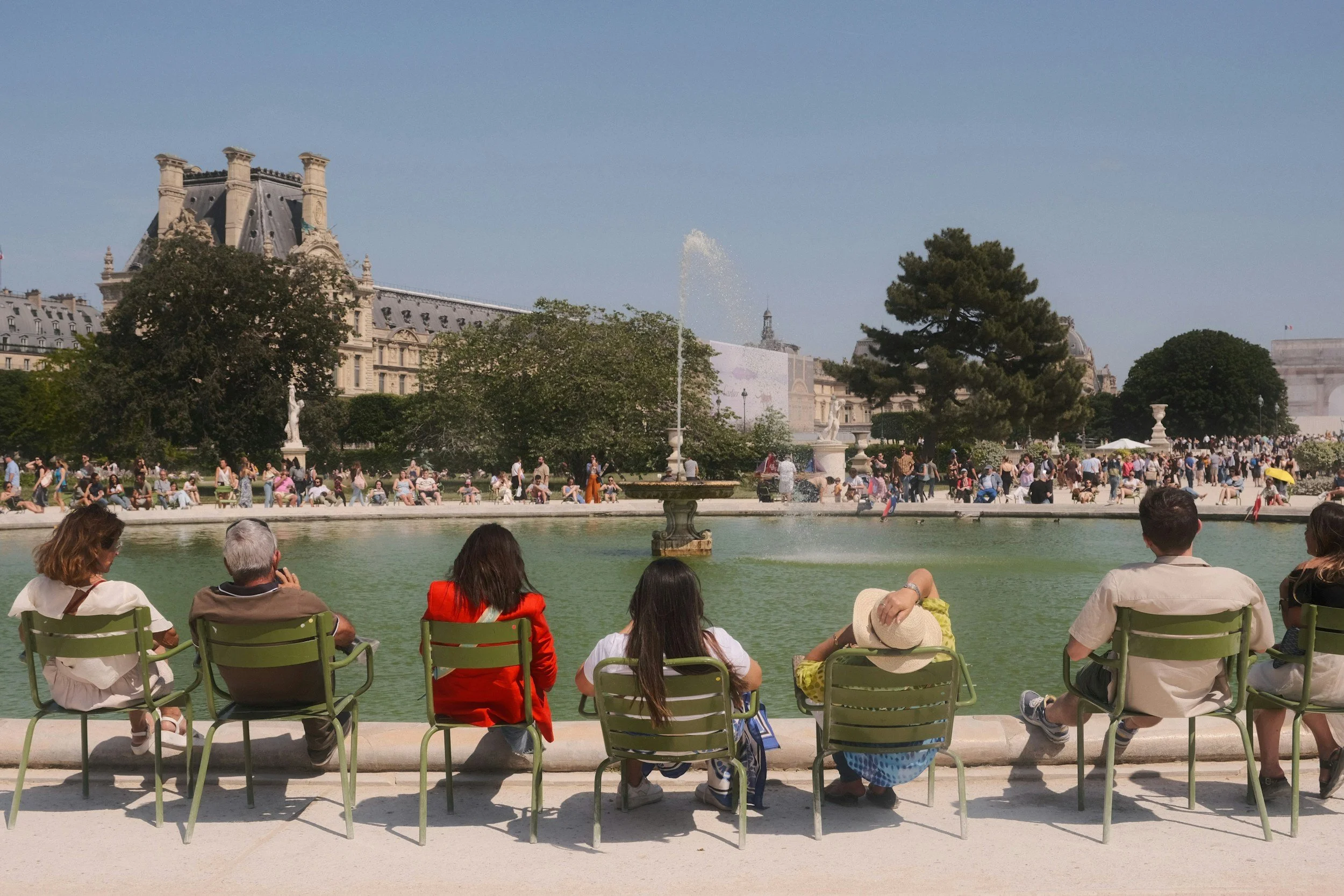
She commissioned Salomon de Brosse to build the Palace and the main fountain in front of it. Every day, you can see hundreds of people sitting around the main fountain, enjoying its beauty and the calm it seems to provide in the middle of a bustling city. Jacques Boyceau was commissioned to draw up the garden plans., and Tommaso Francini designed part of the garden, emulating the style of the Italian gardens Marie had grown up with. He also built the Medici Fountain, originally known as the Grotto of Luxembourg. You will find this beautiful fountain on the east side of the garden and, if you visit in spring, enjoy the sight of ducks pairing up along the water. It is the only water feature that was completed, although Marie had planned many fountains and grottos across the grounds.
Betrayal of the son
I like to take a seat near the fountain and imagine how this Queen — powerful as Regent, yet so homesick — was deeply unhappy in a city full of intrigue that did not seem to want her there. During her regency she had arranged her son's marriage to Anne of Austria to strengthen ties with the Habsburgs, as well as her daughter's marriage to Anne's brother. The Habsburgs, throughout European history, were the French crown's greatest rivals. She also kept the Catholic Italian nobility close at court, which was unpopular among the Protestant nobles, and most importantly unpopular with her husband when he was alive. The king had even expressed his deep distrust of them to his Minister Sully When Louis XIII seized power, he ordered the assassination of her favorite, Concino Concini, in 1617, and had Concini's wife, Leonora — Marie's closest confidant and unofficial counsellor — arrested for ‘witchcraft’ and eventually executed. The story of that assassination, which took place at the entrance of the Louvre, is one for another time. All of this unfolded during the construction of the Palace and Garden. Marie was exiled to the Château de Blois, from which she made a notorious escape using a ladder in 1619. Learn more about her escape in this French podcast.
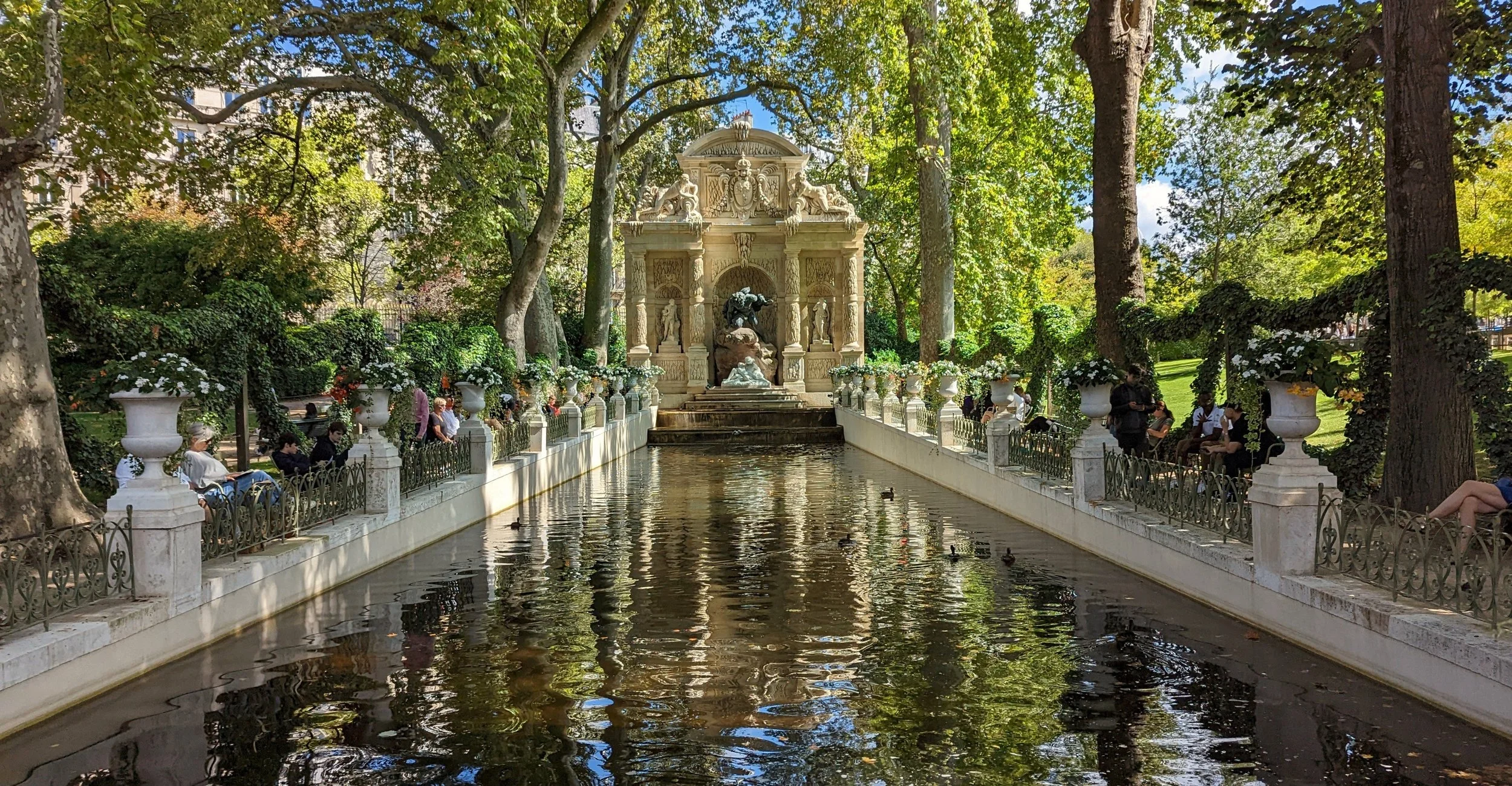
Medici Fountain, Luxembourg Garden. Photo by Alyosha Efros/ Flickr. CC BY-NC 2.0
Marie was eventually allowed to return from exile in 1621 and spent most of her time overseeing the Palace's construction. She was known for supporting artists, just as the Medici always had, and she commissioned many to decorate the Palace and produce paintings. Among them was the famous Flemish painter Peter Paul Rubens, whom she tasked with decorating the two great halls of the Palace: one side devoted to paintings of Marie's life, the other to Henry IV's, with both series meeting in a shared room. For reasons I will detail below, only Marie's cycle would be completed.
The Day of the Dupes
Her downfall as queen would be her rivalry with Cardinal Richelieu, who had once been her ally. It culminated in what we call la Journée des Dupes, the Day of the Dupes, which took place at the Palace of Luxembourg on 10 November 1630. I suggest you take a seat near the fountain facing the Palace of Luxembourg (today’s Senate) for the story below.
That day, Marie met with her son to convince him not to trust Richelieu. Marie and her son had a famously conflictual relationship despite him letting her back to court after exile. She had been the one to introduce Richelieu to the King, after which he rose to become Secretary of State. Over time, she realised that Richelieu was encouraging the King to side with the German Protestant states instead of the Catholic Habsburgs who were her allies, a policy she fiercely resisted.
Somehow, during the discussion, Richelieu managed to break into the room where mother and son were meeting. By the end, Marie believed she had won, and the Cardinal expected to be dismissed of his position, retiring to the Petit Luxembourg which had in fact been gifted to him by Marie three years earlier. Yet in a turn of events, Louis XIII summoned Richelieu to Versailles — not the palace we know today but simply a favourite hunting lodge surrounded by forest. After a long exchange, including what we believe to be Richelieu showing Louis XIII proof that Marie de’ Medici may have had a hand in her own husband’s assassination, Louis XIII famously declared that he cared more for the kingdom than for his mother, and chose to support Richelieu. Checkmate — the Cardinal had won. Marie de' Medici had been defeated at the very site of her own Palace. It would be her last time there.
Exile and the Rubens Legacy
She withdrew to the Château de Compiègne under the watch of Louis XIII’s guards, but managed to escape once more and fled to the Spanish Netherlands, where she was sheltered by France's Spanish enemies. At one point she tried to rally a "league of sons-in-law" among her children's royal spouses. It came to nothing. She never returned to France and the construction of her Luxembourg estate came to an end with her departure.
In her final years she found refuge with her aforementioned friend Rubens, a testament to how deeply art shaped her life and her closest relationships. If you are curious, Rubens’ collection of impressive Baroque style large-scale paintings of Marie de' Medici hangs in the Richelieu wing of the Louvre* — as ironic as it seems given her history with Richelieu — and consists of 21 paintings depicting Marie’s own struggles and triumphs in life. In painting these scenes, Rubens had to be careful not to offend Louis XIII or other French political figures. At that time, women usually did not receive such tribute. Rubens depicted her in a positive light, deifying her in many cases. Many of the events I have described appear in the collection: The Exchange of the Princesses at the Spanish Border (Marie as regent marrying her daughter to the Habsburgs, and receiving her son’s bride), The Flight from Blois (depicting her escape from her first place of exile), Reconciliation of the Queen and her Son, and The Triumph of Truth (representing her and her son reconciling before heaven). The collection on Henry IV that Rubens was also supposed to create was never completed. Richelieu discouraged it, and in 1631, when Marie was banished for the second time, the project was abandoned entirely.
She died of pleurisy on 3 July 1642 in Cologne at the Rubens household. Almost a year passed before her body was laid to rest in the Basilica of Saint-Denis, alongside the other French monarchs. Her heart was sent to the church at La Flèche to rest beside Henry IV's, as he had wished. Her son died just two months after her funeral — and the rest, as they say, is history.
After Marie
The garden became the property of the Comte de Provence, the future Louis XVIII, in 1778. He sold parts of the land to finance the restoration of the palace. Eventually, Napoleon III, during a walk in the garden, decided to save the estate from Haussmanian reduction. Today, it is a 23-hectare garden containing an Orangerie, orchards of rare apples, greenhouses, and 106 statues spanning over five centuries of sculpture.
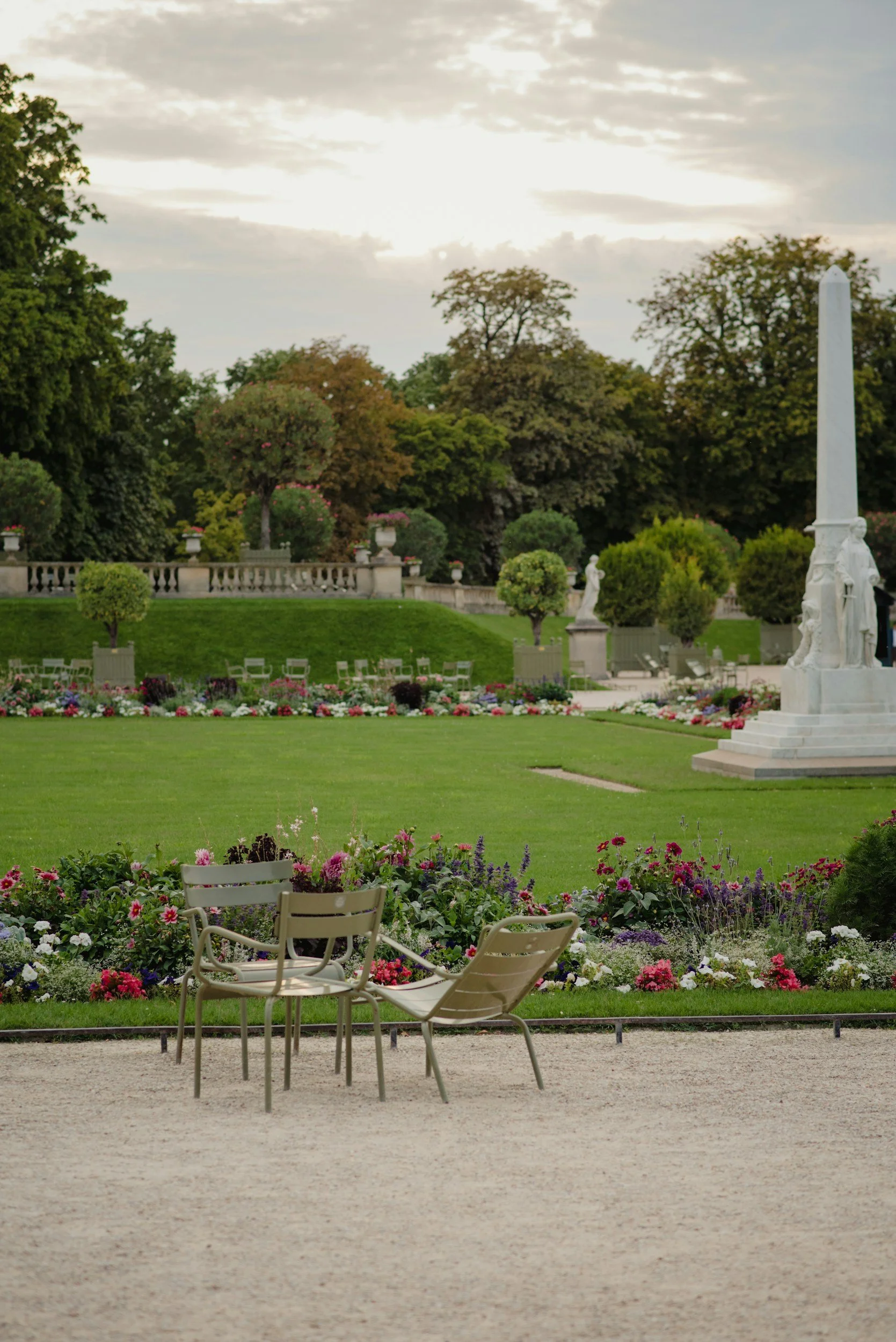
Re-exploring this garden through the chaotic life of Marie de’ Medici has been an adventure for me. This queen, whose family name is entrenched in history, had a tumultuous ten-year marriage with Henry IV, then, during her regency, tried to strengthen ties with the Habsburgs and Italians at all costs, while trying to create a memory of Florence for herself in Paris. But the downfall of her reign would be her love and hate relationship with her son and Richelieu. Looking at the magnificent fountain, the façade of the Senate, and the beautiful greenery —- I imagine Marie would be happy that one of her legacies has become one of Parisians’ favorite gardens and the home to one of the country’s legislative branches. Of course, the kings and queens I will talk about are not saints, their reigns brought wars and suffering too, but retracing their lives reveals how their passions and decisions shaped the city we walk through today. Marie was not the first Medici queen to leave her mark on Paris — Catherine de' Medici, who married Henri II decades earlier, was the one behind the construction of the Jardin des Tuileries, also wanting to recreate the Italian garden style in Paris (a tale for another day).
Why ‘Garden of the Queen(s)?
To continue the discussion on queens and women, this garden is also now a home for many more queens. I call it the ‘Garden of the Queens’ because it displays the statues of twenty French queens and illustrious women. Walk around the elevated terrace near the staircases leading to the main fountain, and you will see a series of statues of women with their names inscribed below — Marie de' Medici among them. In 1843, the Ministry of Fine Arts commissioned the series after the Duc Decazes found the nude statues in the garden vulgar. The plan was to replace scandal with history and to adorn the central area with statues of the Queens of France and other illustrious women instead. The twenty women to be honoured were chosen by Louis-Philippe, who ruled France from 1830 to 1848, and multiple sculptors were commissioned. The series is understood as the feminine counterpart to the Hommes Illustres commissioned around the same time and now displayed at the Louvre.
I had made a mission for myself in 2019, after writing my dissertation on Queen Aliénor of Aquitaine, that I would read the biography of each queen beside her statue. So far, I have read zero — but I have a few of the queens’ biographies and it is certainly sunny outside nowadays... Perhaps you will find me reading near one of the statues one day, so don’t hesitate to say hi! Each of these twenty women will surely become a topic in future posts as I love telling the stories of the queens and illustrious women of France, that have far from gotten the coverage they deserve.
As you continue through the garden, you will find many other treasures, but I will keep that for another post.
Interactive Map of the French queens and illustrious women
Below, you will find an interactive map of where all the statues of the French queens and illustrious women are in the garden. Hover over their name (this is a more computer friendly setting, but on a phone just long click), and you will find brief descriptions as well as links to other articles I wrote if I happened to cover them.

For more information on the Queens, saints and illustrious women, check out this document from page 41.
*Find out more about the Medici Gallery here on the Louvre website, although the Gallery is, at the time of the writing of this blogpost, temporarily closed as they are in fact restoring this very collection. This means we will get to see the shiny restored version when it reopens!
For French speakers I also recommend watching the Secrets d’histoire episode on Marie de’ Medici if you have the subscription and an hour and a half to spare! (link on the picture)

Sources:
Jardin du Luxembourg — Histoire et patrimoine (Senate website, in French)
Reines de France et Femmes illustres (Wikipedia, in French)
Marie de' Medici cycle (Wikipedia, in English)
Le Petit Luxembourg — a vestige of Marie de' Medici (Google Arts & Culture, in French)
Podcast: Marie de' Medici's escape from Blois (YouTube, in French)
Below are the books I used for my research: