

A place where stories never die — Père Lachaise
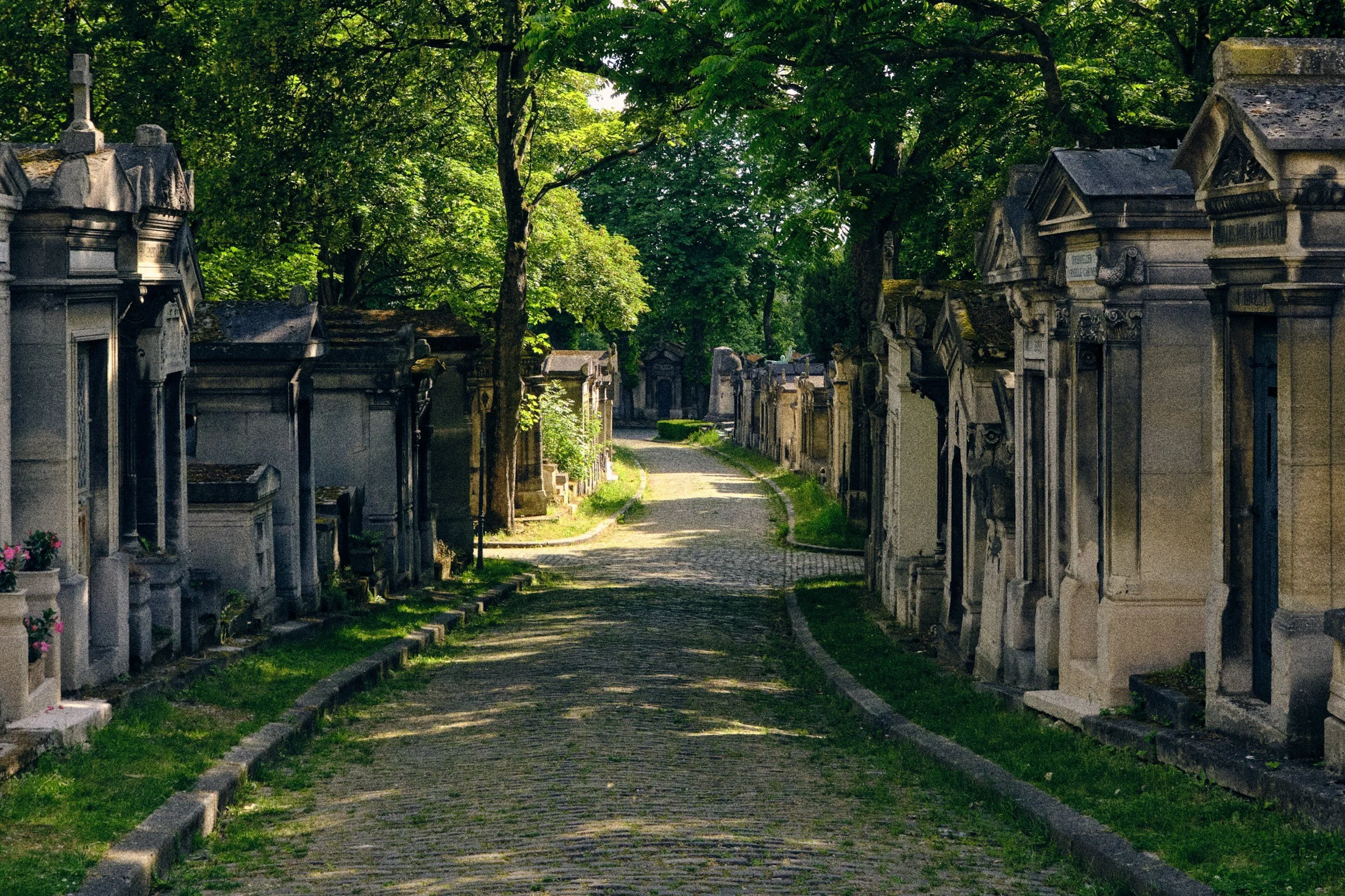
As we enter a record breaking heat this summer, I am bringing you to a place where you might find some shade and nature. It is one of my favorite places in Paris: Père Lachaise Cemetery.
For this journey, prepare a bottle of water, sunglasses and good walking shoes (the roads are pavement mostly and there are a few stairs).
I've found myself spending hours in this cemetery, having brought most of my visiting friends and family. There is so much to explore; I once spent 5 hours wandering around with my aunt and uncle, discovering the stories behind some of the most extravagant tombs I have ever seen. With my grandmother too, we had walked for hours, and she had surprised me with her knowledge of artists, writers, composers that had just recently died and that had just been buried — we would spend a few quiet minutes near their tomb. We also sat for hours around the roundabout and listened to the birds singing. You can find an array of Paris' wildlife in this treasure of a cemetery.
There is a diversity of tombs, each more unique than the other. You will find Buddhist, Islamic, Jewish, Catholic, Protestant tombs. Some have epitaphs, some are cenotaphs, some have romantic messages and even statues. It is a museum of the dead. There is a waiting list to be buried here and the price stands at 15k. However, you can only stay buried there if someone takes care of your tomb. After more than 30 years of abandonment, you get moved and someone else gets buried. There are today more than 70 thousand concessions and 3 million visitors from all over the world per year.
Now you might ask, how did this cemetery become so popular?
Origin story and the name Lachaise
Where the cemetery is located now used to be land that belonged to the Jesuits in the 17th century and was called Mont-Louis. François d'Aix de La Chaize, a superior of the Jesuits, became the priest and confessor of the Sun King, King Louis XIV in 1675. He would spend a lot of time on Mont-Louis for spiritual retreats, and decided in 1676, with Louis XIV's support, to build a small castle surrounded by beautiful French-style gardens. La Chaize knew all the secrets of the King as his confessor; he was also present for the secret marriage of Louis XIV to Madame de Maintenon, his companion, soon after the death of Queen Marie-Thérèse in 1683.
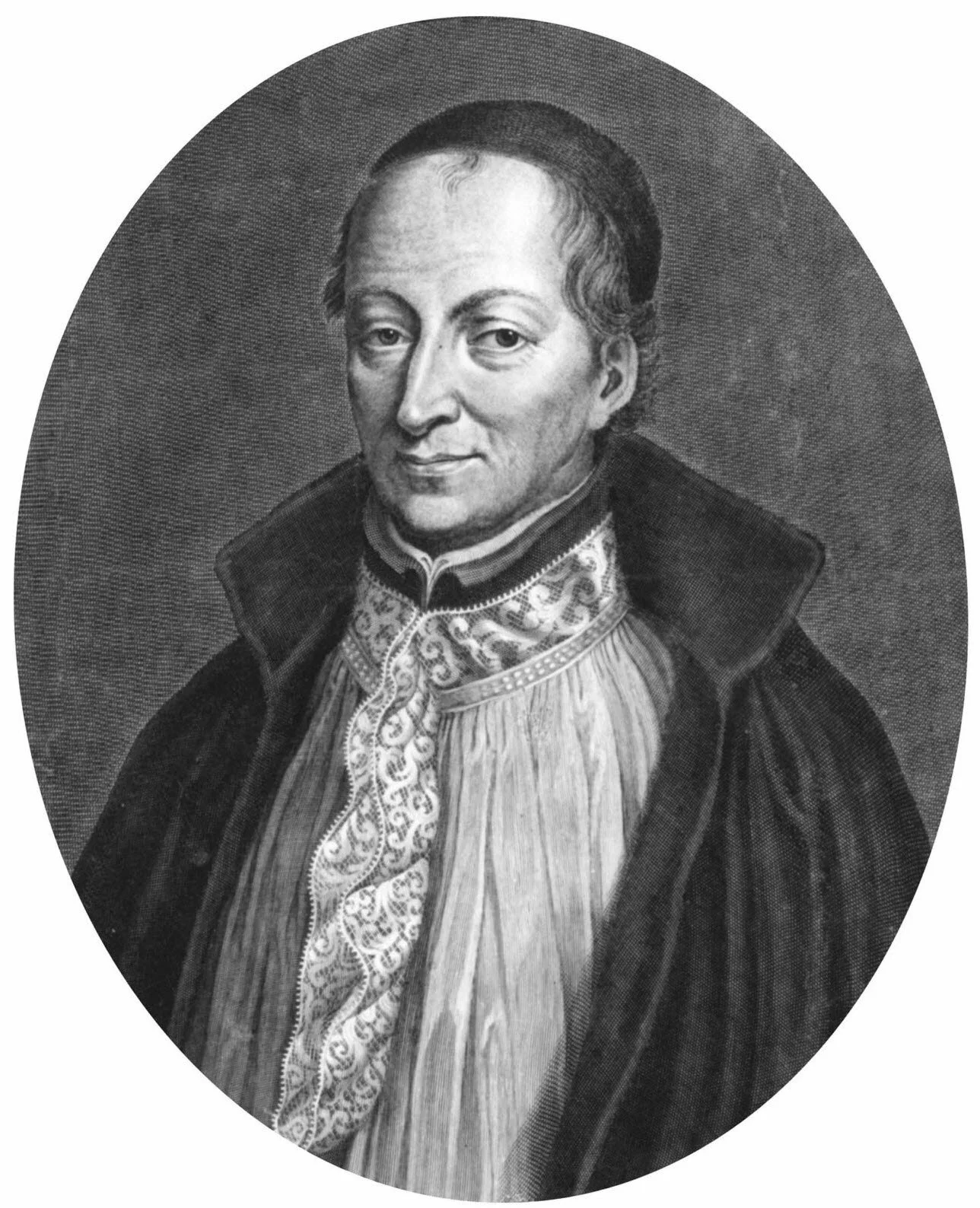
Portrait of François d’Aix de La Chaize, © Rue des Archives
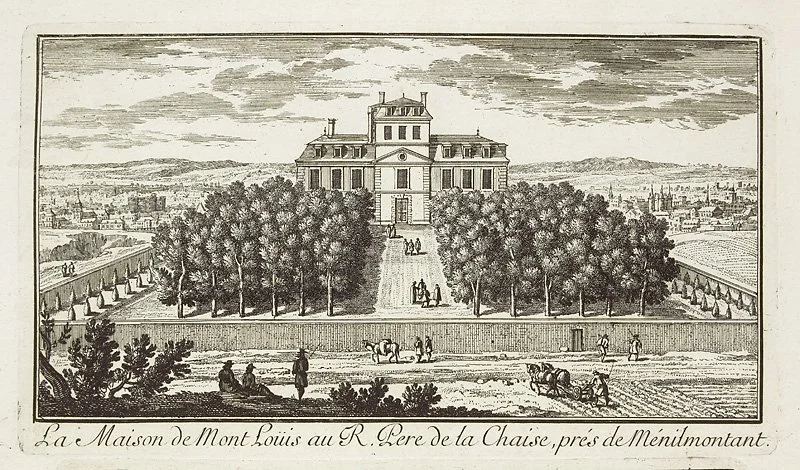
A drawing of the Castle on Mont-Louis, © Benoit Chain
In 1762, Jesuits were sent off to exile from France, but the house on Mont-Louis kept the name: Maison du Père Lachaise.
In 1765, a ruling outlawed cemeteries inside Paris for sanitary reasons. Back then, the biggest cemetery was the Cemetery of the Innocents, located near today's Les Halles. In its place, you will find the Fountain of the Innocents that was also recently renovated (find out more about the history of the Fountain here).
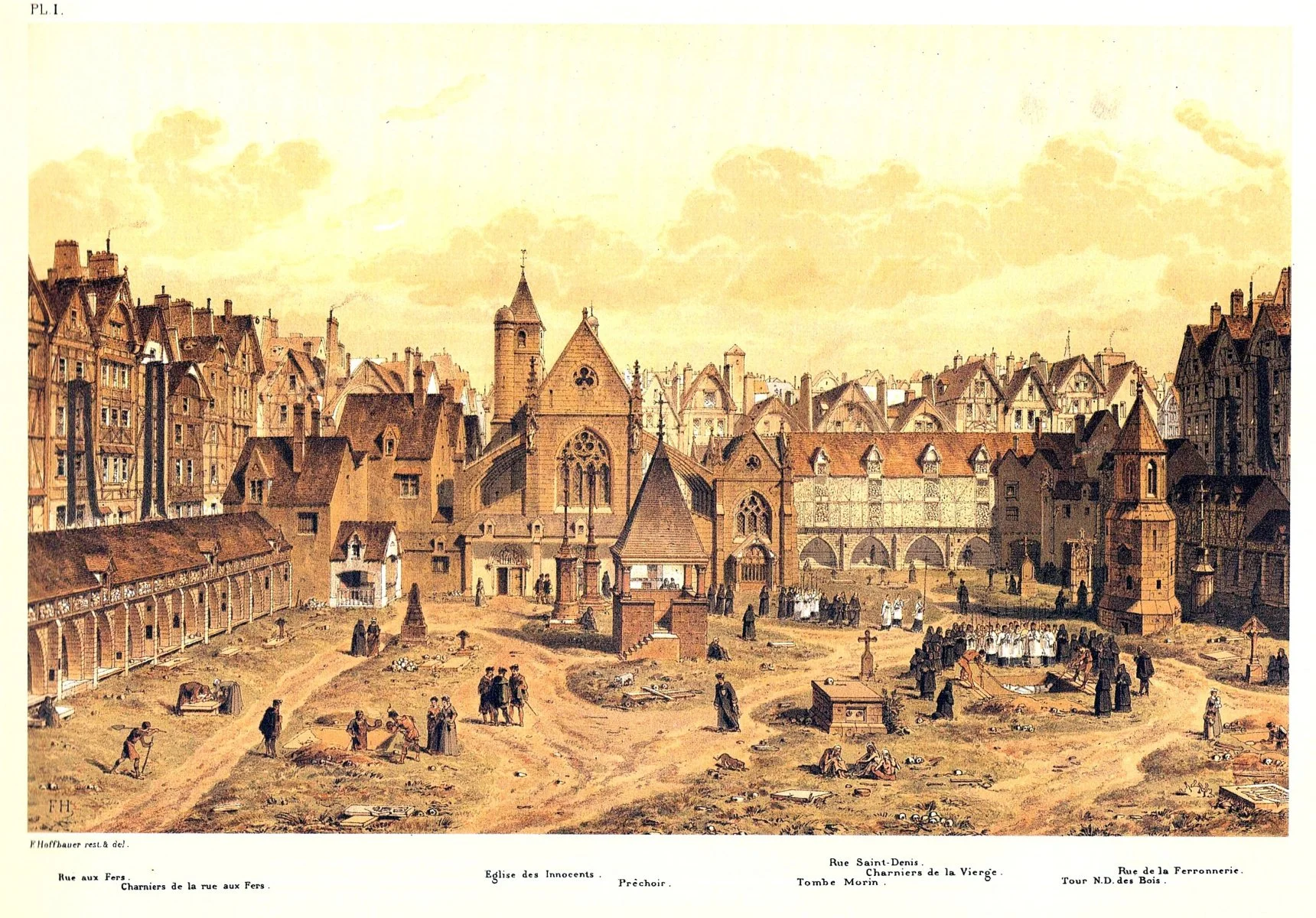
The Cemetery of the Innocents, © Theodor Josef Hubert Hoffbauer
The cemetery was closed in 1780 as it was overflowing with bones, and emptied in 1786 when the bones were moved to the Catacombs in the South of Paris. During renovations and constructions, skeletons can still be found to this day.
In 1803, Napoleon Bonaparte decided that the City of Paris purchase Mont-Louis to build a new cemetery. Napoleon famously claimed that every citizen had the right to be buried no matter his or her race or religion. During his rule, the cemeteries Montparnasse, Montmartre and Passy were also built (then, outside of Paris). The cemetery on Mont-Louis opened on 21 May 1804, officially called: Cimetière de l'Est (Cemetery of the East), though Parisians quickly called it: Cimetière du Père Lachaise.
Becoming the popular Cemetery it is today
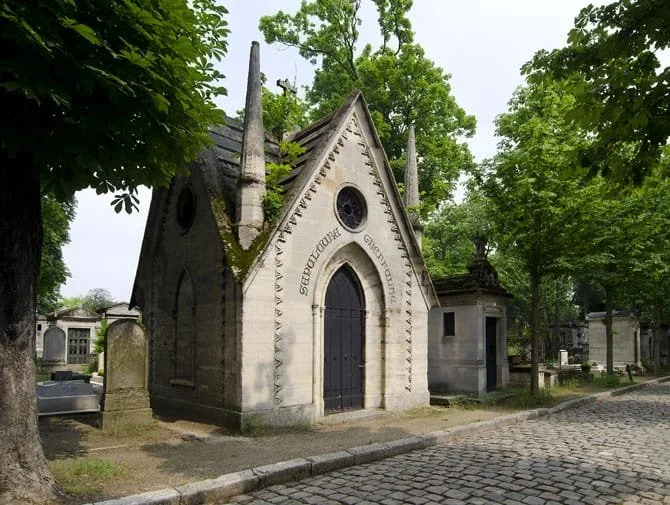
The Greffulhe family vault, © Douglas Keister
Alexandre-Théodore Brongniart is the great mind behind the Père Lachaise Cemetery. He was put in charge of its conception in 1803. He drew up the cemetery in the English Garden style. Though he was a neoclassical architect himself, the single tomb he actually built her, the Greffulhe family vault, was neo-Gothic, a style that would go on to define much of the cemetery even though Neo-Classical was the dominant style of the time. Brongniart is also the mind behind the architecture of the Bourse de Paris.
By 1815, the cemetery was a failure. It only had 2000 tombs. In response, the Prefecture of Paris did what we would call today a successful marketing campaign by moving the remains of renowned French figures: the playwright Molière, poet Jean de La Fontaine, and the star-crossed medieval lovers Héloïse and Abélard. By 1830, there were now more than 33 thousand tombs, and today there are more than 70 thousand.
Below, you will find an interactive map I have created to help you situate the most renowned tombs. Most importantly, it will lead you to my favorite tomb with a story of star-crossed lovers from medieval times: Héloïse and Abélard's tomb. For the others, I will tell their stories little by little….
Famous Graves of Père Lachaise
Click a name to find the grave · hover over a name for a brief description
The lovers
- 32★ Héloïse & Abélard the loversdiv 7
Writers & poets
- 2Guillaume Apollinaire 1880–1918div 86
- 3Miguel Ángel Asturias 1899–1974div 10
- 4Honoré de Balzac 1799–1850div 48
- 5Beaumarchais 1732–1799div 28
- 9Anthelme Brillat-Savarin 1755–1826div 28
- 37Jean de La Fontaine 1621–1695div 25
- 31Sadegh Hedayat 1903–1951div 85
- 44Molière 1622–1673div 25
- 47Alfred de Musset 1810–1857div 4
- 50Victor Noir 1848–1870div 92
- 58Marcel Proust 1871–1922div 85
- 66Gertrude Stein 1874–1946div 94
- 70Oscar Wilde 1854–1900div 89
- 71Richard Wright 1908–1960div 87
Painters, sculptors & photographers
- 15Camille Corot 1796–1875div 24
- 16Honoré Daumier 1808–1879div 24
- 17Jacques-Louis David 1748–1829div 56
- 18Eugène Delacroix 1798–1863div 49
- 22Gustave Doré 1832–1883div 22
- 25Max Ernst 1891–1976div 87
- 26Théodore Géricault 1791–1824div 12
- 33J.-A.-D. Ingres 1780–1867div 23
- 36Frantisek Kupka 1871–1957div 87
- 39René Lalique 1860–1945div 23
- 40Marie Laurencin 1885–1956div 88
- 43Amedeo Modigliani 1884–1920div 96
- 48Nadar 1820–1910div 36
- 21Giuseppe De Nittis 1846–1884div 11
- 54Camille Pissarro 1830–1903div 7
- 57James Pradier 1790–1852div 24
- 62Georges Seurat 1859–1891div 66
- 67Gerda Taro 1910–1937div 97
Composers & musicians
- 6Vincenzo Bellini 1801–1835div 11
- 7Georges Bizet 1838–1875div 68
- 11Maria Callas 1923–1977div 87
- 13Luigi Cherubini 1760–1842div 11
- 14Frédéric Chopin 1810–1849div 11
- 23Paul Dukas 1865–1935div 87
- 35Ahmet Kaya 1956–2000div 71
- 46Jim Morrison 1943–1971div 6
- 53Michel Petrucciani 1962–1999div 11
- 52Édith Piaf 1915–1963div 97
- 56Francis Poulenc 1899–1963div 5
- 60Gioacchino Rossini 1792–1868div 4
Stage & screen
- 24Isadora Duncan 1878–1927div 87
- 28Yilmaz Güney 1937–1984div 62
- 45Yves Montand 1921–1991div 44
- 42Georges Méliès 1861–1938div 64
- 51Max Ophüls 1902–1957div 87
- 55Elvire Popesco 1894–1993div 85
- 59Étienne-Gaspard Robertson 1763–1837div 8
- 64Simone Signoret 1921–1985div 44
Statesmen, scientists & thinkers
- 8Pierre Bourdieu 1930–2002div 28
- 12Jean-François Champollion 1790–1832div 18
- 27Abdul Rahman Ghassemlou 1930–1989div 76
- 29Samuel Hahnemann 1755–1843div 19
- 30Georges-Eugène Haussmann 1809–1891div 4
- 34Allan Kardec 1804–1869div 44
- 41Ferdinand de Lesseps 1805–1894div 6
- 49Imre Nagy 1896–1958div 44
- 1Antranik Ozanian 1866–1927div 94
- 61James de Rothschild 1792–1868div 7
- 63Sadegh Sharafkandi 1938–1992div 42
- 65David Sintzheim 1745–1812div 7
- 68Swami Vijayananda 1914–2010div 41
Other notables
- 10Ettore Bugatti 1881–1947div 97
- 20Élisabeth Demidoff 1779–1818div 19
- 19Cino & Simone Del Duca 1899–1967 / 1912–2004div 53
- 38Ted Lapidus 1929–2008div 53
- 69Sir Richard Wallace 1818–1890div 28
